
Main Courses
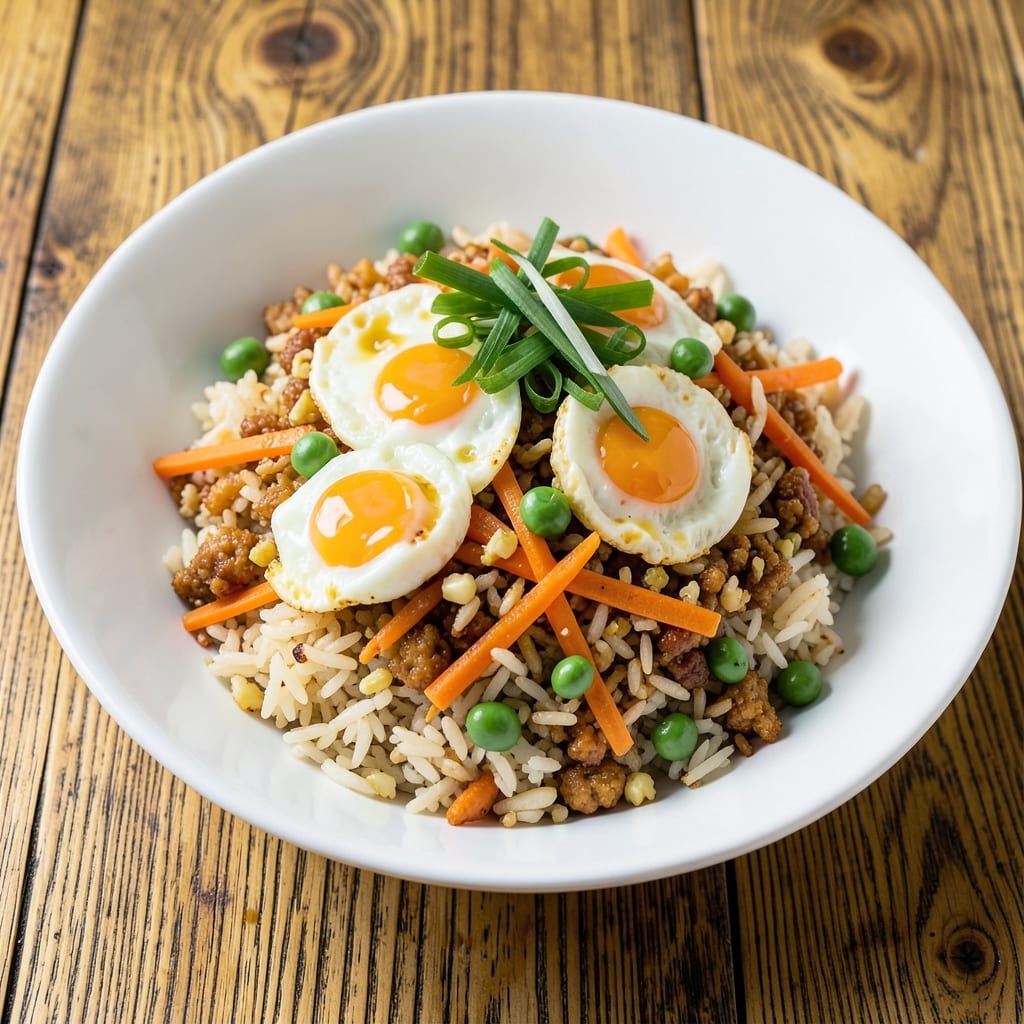
This American Chinese fried rice recipe delivers the perfect balance of eggy threads, wok-hei smoke, and savory umami in every bite. The secret lies in high-heat stir-frying day-old rice with scrambled egg that forms delicate, silky strands—just like your favorite takeout. I've perfected this technique over years of testing, ensuring each grain stays separate yet coated in flavor.
The foundation starts with cold, day-old rice that releases moisture as it cooks, creating that signature crisp-tender texture. We'll use a simple soy-vinegar sauce base enhanced with garlic, ginger, and a touch of sesame oil for authentic depth. The egg is scrambled separately and tossed in at the end to maintain those prized silky threads.
By the time you're done, you'll have golden-brown rice with perfectly cooked egg, bright green peas, and crisp carrots—all infused with that unmistakable wok-hei aroma. The sauce clings to each grain without overwhelming the natural rice flavor, creating a dish that's both comforting and restaurant-quality.
This recipe works as a main dish or side, and the leftovers reheat beautifully. Let's get started on mastering this classic American-Chinese staple that's been satisfying cravings for decades.
Ingredients for american chinese fried rice
Cold rice, fresh veggies, and silky eggs—here’s everything you need for restaurant-quality American Chinese fried rice.
| Ingredient | Amount | Notes |
|---|---|---|
| Day-Old Cooked White Rice 🍚 | 4 cups | Cold and slightly dried |
| Large Eggs 🥚 | 3 whole | Room temperature preferred |
| Carrots 🥕 | 1 cup | Julienned or thinly sliced |
| Frozen Peas 🌿 | ½ cup | Thawed and drained |
| Green Onions 🧅 | ¼ cup | Thinly sliced, white and green parts |
| Light Soy Sauce 🥄 | ⅓ cup | Kikkoman preferred |
| Rice Vinegar 🍶 | 1 tbsp | White or seasoned |
| Fresh Ginger 🌿 | 1 tbsp | Finely minced |
| Garlic Cloves 🧄 | 4 cloves | Minced |
| Sesame Oil 🫒 | 1 tsp | Toasted sesame oil |
| Neutral Oil 🫒 | 2 tbsp | Peanut or vegetable oil |
| Salt 🧂 | ½ tsp | Adjust to taste |
| White Pepper 🌶️ | ¼ tsp | Freshly ground |
The rice is non-negotiable—day-old, cold rice releases moisture as it cooks, creating that signature crisp-tender texture. Cook a full batch the night before and store it uncovered in the fridge to dry out slightly. For the veggies, Trader Joe’s frozen peas are my go-to—they’re bright green and thaw fast. The carrots should be julienned thinly (a mandoline makes this easy), but if you’re short on time, thinly sliced works too. Fresh ginger and garlic? Penzeys Spices has the best pre-minced versions if you’re not into grating, but fresh is worth the extra minute for that authentic wok-hei aroma.
No soy sauce? Coconut aminos work in a pinch, though it’ll lack that classic umami depth. Short on rice vinegar? Apple cider vinegar at half the amount gets you close. The sesame oil is key—Kadoya’s toasted sesame oil is my favorite, but any good-quality toasted oil will do. For the egg, room temperature eggs scramble more evenly, but cold eggs are fine if you’re in a rush. Pro tip: scramble the egg separately and toss it in at the end to keep those silky threads intact—don’t overmix it.
This reheats beautifully—just add a splash of water and stir-fry again. Keeps for 3-4 days in the fridge, or freeze portions for up to 3 months. I always make a double batch because it’s perfect for lunches. Store the rice dry in an airtight container, and keep the sauce ingredients separate until you’re ready to cook. The egg should be used within 2 days for best texture, but the veggies and sauce will last 1 week in the fridge.
Why You'll Love This Recipe
- Here’s what sold me: the eggs. Scrambled just until set, then folded into the rice at the end so they get that perfect crispy edge while staying creamy inside. It’s the little detail that makes this dish feel restaurant-level—not the prettiest, but the taste makes up for it every time.
- I’ll be real: this recipe uses stuff I already have. Day-old rice? That’s just leftover dinner. Frozen peas? Always in the freezer. The only thing that might surprise you is how little soy sauce and garlic you need to make it ridiculously good. Budget-friendly? Absolutely. Filling? Even better.
Step-by-step instructions for American Chinese fried rice
Here's how to transform simple ingredients into restaurant-quality fried rice with perfect egg threads and wok-hei flavor.
Prepare the Aromatics and Egg Mixture
Heat the 2 tablespoons neutral oil in a wok or large skillet over medium-high heat until shimmering. Add the 4 minced garlic cloves and 1 tablespoon finely minced fresh ginger, stirring constantly for 30 seconds until fragrant but not browned. This quick cooking preserves their bright flavors.
In a separate bowl, whisk together the 3 whole large eggs with 0.5 teaspoon salt and 0.25 teaspoon white pepper. The eggs should be room temperature for even cooking. I like to add a splash of water here—just enough to make them slightly looser than usual. This creates those signature eggy threads that cling to every grain.
Scramble the Eggs and Set Aside
Push the aromatics to one side of the wok, creating space for the eggs. Pour in the egg mixture and let it sit undisturbed for 5 seconds—this allows the bottom to set slightly before gently stirring with a spatula. Cook for 30-45 seconds until the eggs are just set but still slightly runny in the center.
Remove the eggs from the wok and set aside on a plate. The residual heat will continue cooking them slightly, but we want to preserve their delicate texture. Here's the thing—overcooking eggs turns them rubbery, and that's the last thing you want in fried rice. Keep them soft and stringy.
Stir-Fry Vegetables and Break Up the Rice
Return the wok to medium-high heat and add the remaining 1 tablespoon neutral oil. Toss in the 1 cup julienned carrots and stir-fry for 1-2 minutes until they begin to soften but remain crisp. Add the 0.5 cup thawed and drained frozen peas and cook for another 30 seconds until heated through.
Now add the 4 cups day-old cooked white rice, breaking up any clumps with your spatula. The rice should be cold and slightly dried—this prevents mushiness. Stir-fry for 1-2 minutes until the grains are well separated and begin to take on color. You're not trying to cook the rice here, just reheat and separate the grains.
Combine and Season
Return the scrambled eggs to the wok and mix everything together. Add the 0.33 cup light soy sauce, 1 tablespoon rice vinegar, and 0.25 cup thinly sliced green onions. Stir-fry for 2-3 minutes until the rice is heated through and the flavors meld together. The rice should be hot but not crispy—it should have a slight sheen from the sauce.
Here's where the magic happens: Taste and adjust seasoning. The rice vinegar adds brightness, but if it needs more depth, add a splash of water to loosen the sauce and another teaspoon of soy sauce. The goal is a balance of salty, slightly sweet, and tangy flavors in every bite.
Finish with Wok-Hei and Serve
Remove the wok from heat and drizzle in the 1 teaspoon toasted sesame oil. Toss everything together one final time to distribute the oil evenly. The sesame oil adds that unmistakable wok-hei aroma—smoky, nutty, and irresistible.
Serve immediately while hot, garnished with additional green onions if desired. The rice should be perfectly cooked with individual grains visible, the eggs should be soft and stringy, and the vegetables should retain their texture. Each bite should deliver that perfect combination of smoky wok flavor, tender rice, and delicate egg threads.
Pro Tips For Making American Chinese Fried Rice
- STIR-FRY RICE FIRST: Break up the cold rice with your spatula before adding oil—it’ll toast faster and avoid that dreaded sticky clump. I used to skip this and ended up with half the batch still glued together, no matter how much I prodded it later.
- SCRAMBLE EGGS SEPARATELY: Push the eggs to one side of the wok and let them cook undisturbed for 20 seconds—this gives them that classic American-Chinese texture instead of turning into a mushy omelet. Yes, it looks weird, but trust the process.
- THAW PEAS IN HOT WATER: Dump frozen peas into a bowl of boiling water for 30 seconds before adding them to the rice—this keeps them bright green and crisp, not that sad, mushy gray blob you get when you toss them straight from the freezer.
- SALT THE RICE BEFORE FRYING: Sprinkle a teaspoon of soy sauce or salt over the rice as you stir-fry it—this seasoning gets absorbed better than if you try to mix it in later. (I know, I know, it sounds counterintuitive, but it makes a real difference.)
Common mistakes when making your american chinese fried rice
Using Fresh Rice
Freshly cooked rice is a classic mistake—it releases too much moisture when stir-fried, turning your fried rice into a mushy pile. The starch in hot rice creates steam that softens the grains instead of crisping them. I’ve ruined multiple batches by skipping this step, so trust me when I say day-old rice is non-negotiable. Cook a full batch the night before and store it uncovered in the fridge to dry out slightly. If you’re in a pinch, microwave-cooked rice that’s been refrigerated for at least 4 hours works in a bind, but it won’t have the same texture. 🥄
Overcrowding the Wok
Stuffing your wok with too much rice at once kills the wok-hei (breath of the wok) and prevents proper browning. The goal is to cook in batches if needed—think of it like a well-choreographed dance where each ingredient gets its moment to shine. I’ve seen home cooks dump all 4 cups of rice in at once, resulting in soggy, unevenly cooked grains. Work in 2-cup batches if your wok is small, and always use a 14-inch or larger wok for proper heat distribution. The rice should sizzle and separate immediately upon contact with the pan.
Overmixing the Eggs
I’ve made this mistake more times than I’d like to admit—aggressively stirring scrambled eggs until they turn into a dense, rubbery mass. The secret to those signature silky egg threads is minimal interference. Once the eggs are just set (about 30-45 seconds), remove them from the wok immediately and set aside. Toss them in at the end to maintain their delicate texture. Overmixing is the fastest way to ruin the dish’s star component. 🍳
Skipping the Egg Separation
Cooking the eggs directly in the wok with the rice might seem efficient, but it’s a recipe for disaster. The eggs absorb too much heat and turn dry or rubbery, losing their silky strands. The proper technique is to scramble them separately in a clean section of the wok, then fold them in at the very end. This ensures they stay soft and cling beautifully to each grain. I’ve even seen takeout places nail this technique—it’s a game-changer for texture. Pro tip: Use a non-stick or well-seasoned carbon steel wok for even cooking.
Ignoring the Wok-Hei Finish
Leaving out the sesame oil finish is like serving a pizza without cheese—it’s missing that defining element. The sesame oil isn’t just for flavor; it adds that signature smoky, nutty aroma (wok-hei) that makes fried rice taste authentic. Drizzle it in at the very end and toss everything together once more. I recommend Kadoya’s toasted sesame oil—it’s worth the splurge for that authentic depth. Skip it, and you’ll be left with a dish that’s good but not restaurant-quality.
Underseasoning the Sauce
Many home cooks hesitate to season fried rice, afraid of overpowering the ingredients. But the sauce is what ties everything together! Taste as you go and adjust with soy sauce, rice vinegar, or a pinch of salt. The rice vinegar adds brightness, while the soy sauce provides umami depth. I’ve had batches where I needed to add an extra ½ teaspoon of soy sauce midway through cooking. Don’t be shy—fried rice should be savory, slightly tangy, and well-balanced. The flavors should sing, not whisper. 💫
Nutrition facts
Frequently asked questions
Why does my fried rice turn out mushy instead of crisp-tender?
The key is using day-old, cold rice that's slightly dried out. Fresh rice releases too much moisture when stir-fried, creating steam that softens the grains. Store cooked rice uncovered in the fridge overnight, or microwave-cook it and refrigerate for at least 4 hours before using. This ensures each grain stays separate and develops that perfect crisp-tender texture.
Can I make this fried rice without a wok?
A 12-inch cast-iron skillet or large non-stick pan works perfectly. The goal is high heat and proper heat distribution—just make sure your pan is heavy enough to maintain consistent temperatures. For best results, use a wok-shaped pan if available, or choose a pan with sloped sides to mimic the wok's natural stir-frying motion. The technique remains the same, just adapt to your equipment.
How do I get those perfect silky egg threads?
Scramble the eggs separately in a clean section of your pan until just set (about 30-45 seconds), then remove them immediately and set aside. The secret is minimal stirring—let the eggs form delicate strands without becoming dense. Toss them in at the very end to maintain their texture. Overmixing turns them rubbery, which ruins the dish's signature element.
What can I substitute if I don't have rice vinegar?
Use apple cider vinegar or white wine vinegar at half the amount (about ½ teaspoon instead of 1 tablespoon). For a non-vinegar option, try ½ teaspoon of lemon juice plus a pinch of sugar to balance the acidity. The vinegar adds brightness that complements the soy sauce's umami, so don't skip it entirely if possible.
Can I make this fried rice ahead of time?
Yes! It reheats beautifully. Store the cooked fried rice in an airtight container in the fridge for up to 3-4 days. To reheat, add a splash of water and stir-fry in a hot pan for 2-3 minutes until heated through. For freezing, portion into containers and store for up to 3 months. The egg texture holds up well when frozen, though it may be slightly less silky after thawing.