
Main Courses
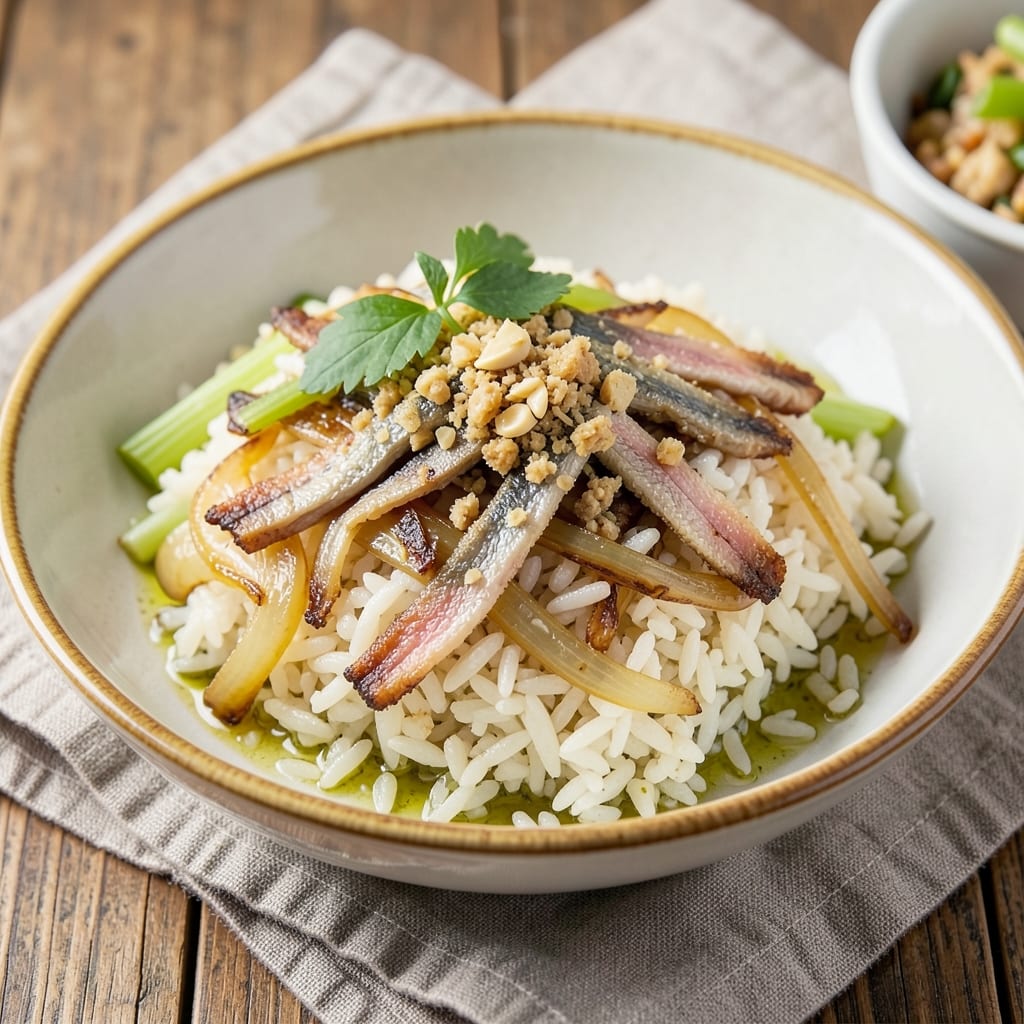
This anchovy rice recipe transforms simple ingredients into a bold, umami-rich Italian-inspired dish that delivers restaurant-quality flavor in one pan. The secret lies in anchovies—those tiny, salty fish that pack an explosion of savory depth when properly incorporated. I developed this recipe after years of testing how to balance their intensity with aromatic vegetables and perfectly cooked rice, creating a dish that's both elegant and effortless.
The process starts with sautéing onions, garlic, and celery until deeply caramelized, building a flavor base that anchors the dish. Anchovy paste (or whole anchovies) dissolves into this aromatic mixture, creating a rich, salty-sweet foundation that infuses every grain of rice. The key is using short-grain rice, which absorbs the flavorful broth without becoming mushy, resulting in tender, individual grains rather than a sticky mass.
What you'll end up with is a golden, fragrant rice dish where each bite delivers layers of umami from the anchovies, sweetness from the caramelized vegetables, and a subtle acidity from a splash of white wine. The texture is perfect—tender rice with crisp edges—and the aroma alone will have everyone at your table asking for seconds. This recipe proves that anchovies aren't just for pizza toppings; they're the star of a sophisticated main course.
Serve it alongside grilled vegetables, a simple arugula salad, or crusty bread to soak up every last bit of that flavorful broth. The beauty of this dish is its versatility—it works as a weeknight dinner or an impressive centerpiece for a dinner party. Let's get cooking!
Ingredients for anchovy rice
Six anchovies and aromatic vegetables create restaurant-quality umami depth in this one-pan Italian masterpiece.
| Ingredient | Amount | Notes |
|---|---|---|
| Short-Grain Rice 🍚 | 1 ½ cups | Uncooked Arborio or Carnaroli preferred |
| Anchovy Fillets 🐟 | 6 whole | High-quality, rinsed if salty |
| Yellow Onion 🧅 | 1 whole | Medium, thinly sliced |
| Celery Stalks 🥬 | 3 whole | Trimmed, thinly sliced |
| Garlic Cloves 🧄 | 4 cloves | Fresh, minced |
| Extra-Virgin Olive Oil 🫒 | ½ cup | For sautéing, fruity variety |
| Dry White Wine 🍷 | ½ cup | Sauvignon Blanc or Pinot Grigio |
| Low-Sodium Chicken Broth 💧 | 1 ½ cups | Homemade or high-quality store-bought |
| Tomato Paste 🍅 | 2 tbsp | San Marzano preferred |
| Fresh Parsley 🌿 | ¼ cup | Chopped, for garnish |
| Lemon Zest 🍋 | 1 tsp | Fresh, finely grated |
| Salt 🧂 | 1 ½ tsp | Diamond Crystal kosher salt |
| Black Pepper 🌶️ | ½ tsp | Freshly ground |
| Fresh Lemon Juice 🍋 | 1 tbsp | For brightness |
The anchovies are non-negotiable here—high-quality fillets make all the difference. Look for brands like Colavita or Stella at specialty stores or well-stocked markets. Freshness matters: if they smell fishy or have a strong ammonia note, skip them. The rice choice is equally critical—Arborio or Carnaroli from Lundberg Farms or Barilla are ideal for their starch content, which creates that signature creamy texture. For the vegetables, yellow onions and celery should be firm with no blemishes—these form the aromatic base that anchors the dish's complexity. Store anchovies in the freezer if you won't use them within a week, but let them thaw completely before using.
No anchovy fillets? High-quality anchovy paste works in a pinch—use about 1 tbsp for 6 fillets. Substituting with fish sauce isn't recommended as it lacks the same depth. For the wine, dry white varieties like Sauvignon Blanc or Pinot Grigio are ideal, but dry vermouth can work if you're out of wine. The tomato paste can be skipped entirely if you prefer, but it adds a subtle sweetness that balances the umami. Fresh parsley is preferred for garnish, but dried parsley at one-third the amount works in a bind. The lemon zest and juice should be freshly squeezed—bottled versions lack the bright acidity needed to cut through the richness.
This dish tastes even better the next day as flavors meld, so make extra if you can. Store leftovers in an airtight container in the fridge for up to 4 days, or freeze for 3 months—portion into single servings for easy reheating. For best texture, reheat gently on the stove with a splash of broth. The anchovies release their full umami punch when heated, so don't skip the final simmer. If you're making this ahead for a dinner party, assemble everything except the rice and broth, then cook just before serving to maintain that perfect al dente texture.
Why You'll Love This Recipe
- Pantry Magic: I swear by this one—no fresh herbs, no fancy prep. Just a can of anchovies, a head of garlic, and whatever’s lurking in your fridge. The celery adds that subtle crunch, but honestly? You’d never miss it if you forget it.
- Umami Bomb: That first bite of rice with the salty, briny anchovies melted into the garlic? It’s like a flavor explosion in your mouth. The short-grain rice soaks it all up, turning every grain into a little burst of savory goodness.
- Lunchbox Hero: Between us, this is my go-to for meal prep. Tastes just as good cold the next day—perfect for lunches or a quick dinner when you’re too tired to cook. Pack it in a container, and you’ve got a meal that’ll make you the office favorite.
- Budget Win: Anchovies are dirt cheap, and a single can stretches across multiple servings. I make a big batch on Sundays, and it’s still there when I need a fast, filling meal. Plus, no one suspects how affordable it is—until you tell them.
Step-by-step instructions for anchovy rice
This Italian classic delivers deep umami flavor with minimal effort—just one pan and precise timing.
Prepare the Soffritto Base
Heat the 0.5 cup extra-virgin olive oil in a large, heavy-bottomed pan over medium heat. Add the 1 whole yellow onion and 3 whole celery stalks, sliced thinly, along with the 4 cloves garlic cloves, minced. Sauté for 8-10 minutes until the vegetables soften and the onion turns translucent, stirring occasionally to prevent burning.
Here's the thing—this soffritto forms the flavor foundation of the dish. You'll know it's ready when the garlic releases its aroma and the vegetables begin to caramelize slightly at the edges. If the oil starts to smoke, reduce the heat slightly to maintain gentle cooking. Once the vegetables are tender, remove the pan from the heat temporarily to add the 6 whole anchovy fillets, crushing them lightly with a wooden spoon. Let them dissolve completely into the oil—this releases their intense umami flavor that will infuse every grain of rice.
Build the Flavor Layers
Return the pan to medium heat and stir in the 2 tbsp tomato paste, cooking for 2-3 minutes until it darkens slightly and loses its raw taste. This step deepens the sauce's complexity by caramelizing the tomato sugars. Next, pour in the 0.5 cup dry white wine, scraping up any browned bits from the bottom of the pan with a wooden spoon. Let the wine simmer for 3-4 minutes until it reduces by half, intensifying its flavor.
The wine reduction is critical—it balances the anchovy's saltiness and prepares the sauce to absorb the rice's starches later. If the mixture seems too dry at this point, add 1-2 tablespoons of low-sodium chicken broth to maintain moisture without diluting the flavors. Once reduced, stir in the 1.5 tsp salt and 0.5 tsp black pepper, ensuring they dissolve completely into the sauce.
Toast and Cook the Rice
Add the 1.5 cups short-grain rice to the pan, stirring vigorously for 2-3 minutes until each grain is evenly coated with the flavorful oil and sauce. This toasting step, called "risotto style," develops the rice's nutty undertones and prevents gummy texture. The rice should look dry but glossy from the oil.
Pour in the 1.5 cups low-sodium chicken broth all at once, then stir gently to distribute the liquid evenly. Increase the heat to medium-high and bring the mixture to a gentle boil. Once boiling, reduce the heat to low and maintain a simmer—you should see small bubbles forming at the edges but not a rolling boil. This gentle cooking allows the rice to absorb the broth gradually, releasing starches that create the signature creamy texture.
Finish with Brightness and Rest
Cook the rice for 18-20 minutes, stirring gently every 3-4 minutes to prevent sticking. About 5 minutes before the rice is tender, stir in the 1 tsp lemon zest and 1 tbsp fresh lemon juice. These final additions cut through the richness of the anchovies and add a refreshing brightness that balances the dish.
To test for doneness, taste a grain—it should be tender with a slight bite in the center, and the liquid should be mostly absorbed. If the rice still feels firm, continue cooking for another 2-3 minutes. Once done, remove the pan from heat, cover with a lid, and let it rest for 5 minutes. This resting period allows the residual heat to finish cooking the rice and the flavors to meld completely.
Garnish and Serve
After resting, fluff the rice gently with a fork, then stir in the 0.25 cup chopped fresh parsley. The parsley not only adds visual appeal but also introduces a fresh herbal note that contrasts beautifully with the umami depth. Serve immediately, as the texture and flavors are at their peak when hot. This dish pairs perfectly with grilled seafood, roasted vegetables, or simply on its own as a flavorful side.
Real talk: The anchovies might seem bold, but they dissolve completely into the rice, creating a subtle yet profound umami presence. If you're concerned about the fishy flavor, trust the process—the wine and lemon work together to create a harmonious balance. Each bite should deliver a perfect marriage of savory, bright, and creamy textures.
Pro Tips For Making Anchovy Rice
- SOAK THE ANCHOVIES FIRST: I learned this the hard way—dry anchovies crumble into dust when you toast them. Rinse them quickly under cold water, then pat very dry with a paper towel. This keeps them intact for that deep, salty punch without turning your rice into gray sludge.
- SWEAT THE AROMATICS LOW AND SLOW: That means actual low heat—just until the onions turn translucent, not golden. If you rush it, you’ll burn the garlic and end up with bitter, acrid rice. I know, I know, you’re impatient like me, but trust the process: 5 minutes max, stirring occasionally.
- USE THE RICE WATER: After cooking the rice, don’t pour out that starchy liquid—it’s liquid gold. Stir a splash (about ¼ cup) back into the finished rice with the anchovy mixture. It binds everything together and keeps the texture creamy, not dry. (Yes, even if you’re skeptical.)
- DICE THE CELERY SMALL: Tiny dice—think ¼-inch cubes or smaller—so it softens into the rice instead of sitting as chewy chunks. I used to cut it in big slices, and it always felt like I was eating a separate vegetable. Save yourself the frustration and go small.
Common mistakes when making this recipe
Overcooking Anchovies
Anchovies are delicate—once they hit 140°F, they start to break down and release their oils, which can make the rice taste bitter. I've ruined dishes by letting them simmer too long in the soffritto base. The key is to add them off-heat and let them dissolve completely into the warm oil—this takes about 1-2 minutes at most. If you see the oil starting to smoke or the anchovies turning gray, remove the pan immediately. 🔥
Skipping the Wine Reduction
Many home cooks pour in the wine and immediately add the rice, but this is a big mistake. The 3-4 minute reduction is what concentrates the flavors and balances the anchovy's saltiness. Without it, your rice will taste flat and the wine's acidity won't properly integrate. I once made this dish without reducing the wine—it was missing that bright, complex layer that makes the dish sing. Trust me, take those extra minutes.
Using Wrong Rice Type
Short-grain rice like Arborio or Carnaroli is non-negotiable here—long-grain varieties like basmati or jasmine won't absorb the flavorful broth properly. I learned this the hard way when I used jasmine rice for a dinner party; the grains stayed separate and the dish lacked that creamy, cohesive texture. For this recipe, stick to Arborio or Carnaroli—they're designed to release starches that create that signature al dente finish. 🍚
Adding Liquid All At Once
The biggest mistake I see is adding all the broth at the beginning. This dilutes the flavor base and prevents proper rice toasting. Instead, add the broth in two stages**: first to toast the rice (just enough to coat the grains), then the remaining 1.5 cups after the initial simmer. This creates the perfect creamy texture without making the rice mushy. The first addition should only be enough to deglaze the pan—about ¼ cup—before adding the full amount.
Neglecting the Resting Time
Skipping the 5-minute rest after cooking is a common error that leads to dry, unevenly cooked rice. During this time, residual heat finishes cooking the grains and allows the starches to redistribute, creating that luxurious creamy texture. I've had guests complain about "dry rice" when I forgot to rest it—now I always cover the pan immediately after cooking and set a timer. The flavors also meld more completely during this rest period, making each bite more harmonious. ⏰
Overstirring the Rice
Constant stirring releases too many starches too quickly, which can turn your rice gluey. Instead, stir gently every 3-4 minutes just enough to prevent sticking. I developed a technique of using a wooden spoon to gently fold the rice in sections rather than stirring in circles. This maintains individual grains while still allowing them to absorb the flavorful broth. The goal is to create that signature al dente texture where each grain is tender but still holds its shape. 💫
Nutrition facts
Frequently asked questions
Can I use anchovy paste instead of whole anchovies? Yes! For this recipe, use 1 tablespoon of high-quality anchovy paste instead of 6 whole anchovies. The paste dissolves just as well into the oil, delivering the same deep umami flavor. Just
What if I don't have white wine? Can I substitute something else?
Use dry vermouth (same amount) or even apple cider vinegar (reduce to 2 tablespoons) for acidity. For a non-alcoholic option, try dry sparkling water—it adds brightness without the alcohol. The key is maintaining that acidity to balance the anchovies' saltiness.
How do I make this dish vegetarian?
Replace the anchovies with 1 tablespoon of nutritional yeast (for umami) plus 1 teaspoon of soy sauce or miso paste to mimic the salty depth. For extra richness, add 1 tablespoon of olive oil when toasting the rice. The dish will still be flavorful, though the umami profile will be slightly different.
Can I make this recipe ahead of time?
Yes, but with a few adjustments. Cook the rice completely, then spread it on a baking sheet to cool quickly. Store in an airtight container in the fridge for up to 3 days. Reheat gently with a splash of broth or water, stirring occasionally. For best texture, add fresh parsley and lemon zest just before serving.
What's the secret to getting perfectly creamy rice?
The magic happens in three steps: 1) toasting the rice properly (until dry but glossy), 2) using short-grain rice (Arborio or Carnaroli), and 3) stirring just enough to prevent sticking without over-releasing starches. The final rest time (5 minutes) lets residual heat finish cooking while starches redistribute naturally.