
Side Dishes
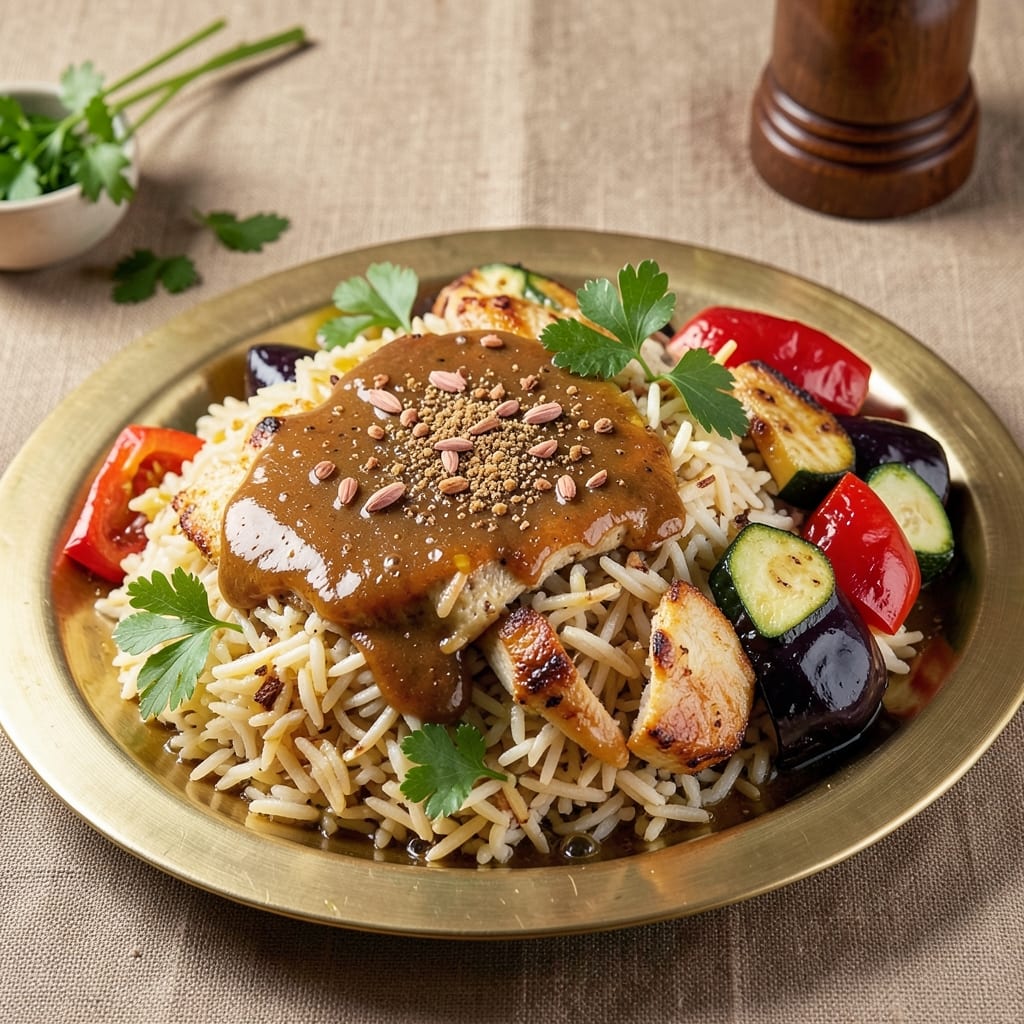
This Arabic rice pilaf recipe transforms simple grains into a fragrant, golden masterpiece where toasted spices and saffron infuse every bite. The secret lies in blooming whole spices in hot oil—cinnamon, cardamom, and cumin—before layering rice with warm broth for even absorption. I perfected this method after years of testing, ensuring each grain stays tender yet distinct, with a crispy bottom that adds texture. What sets this apart is the balance of flavors: warm spices meet bright saffron, while lemon zest cuts through richness. Traditional versions use basmati rice, but modern adaptations work with jasmine or even short-grain varieties for quicker results. The dish pairs beautifully with grilled lamb, chicken, or even as a standalone vegetarian centerpiece. By the final resting period, your pilaf will be fragrant, golden, and perfectly fluffy—each grain infused with aromatic depth. The spices develop further as it sits, releasing their full complexity. Serve it as a side or main, garnished with fresh herbs or a dollop of yogurt for contrast. This recipe honors tradition while adapting to home kitchens, delivering restaurant-quality results with minimal effort. Let's create something extraordinary.
Ingredients for arabic rice pilaf
Twelve aromatic ingredients transform ordinary rice into a fragrant, golden pilaf masterpiece.
| Ingredient | Amount | Notes |
|---|---|---|
| Basmati Rice 🍚 | 1 ½ cups | Uncooked, long-grain preferred |
| Chicken or Vegetable Broth 💧 | 3 cups | Homemade or high-quality store-bought |
| Extra-Virgin Olive Oil 🫒 | ½ cup | For blooming spices |
| Ground Cumin 🌿 | 1 ½ tsp | Freshly ground preferred |
| Ground Cardamom 🌿 | 1 tsp | Green pods preferred |
| Ground Cinnamon 🌿 | ½ tsp | Ceylon preferred for quality |
| Saffron Threads 🌼 | ¼ tsp | High-quality, Iranian preferred |
| Fresh Lemon Zest 🍋 | 1 tbsp | From 1 organic lemon |
| Fresh Parsley 🌿 | ¼ cup | Chopped, for garnish |
| Salt 🧂 | 1 ½ tsp | Diamond Crystal kosher salt |
| Black Peppercorns 🌶️ | ½ tsp | Freshly cracked |
| Plain Greek Yogurt 🥛 | ¼ cup | For garnish, optional |
| Fresh Dill 🌿 | ⅛ cup | Chopped, optional garnish |
The spices are the soul of this dish. Penzeys Spices or Whole Foods bulk bins offer the highest quality ground cumin, cardamom, and cinnamon—look for vibrant color and fresh roasting dates. Saffron is non-negotiable for authenticity; Iranian saffron from specialty markets delivers superior flavor. For lemon zest, use organic lemons—their thicker skins yield more aromatic zest. Freshly cracked black peppercorns add depth that pre-ground can't match. If you're using basmati rice, Calrose Farms or Lundberg brands provide excellent texture. The rice should be aged at least 6 months for optimal grain separation.
No saffron? Turmeric at half the amount mimics the golden hue, though lacks saffron's floral notes. Substitute cardamom with allspice at one-third the quantity for warmth. For a dairy-free version, omit the yogurt garnish or use coconut yogurt. Short on time? Instant rice works in a pinch, though texture will differ. The broth can be vegetarian—simply use vegetable stock instead. For extra richness, add a splash of chicken fat to the oil when blooming spices. Always toast spices in oil until fragrant—they should sizzle gently for 30 seconds before adding rice. This step is critical for developing their aromatic compounds.
Store cooked pilaf in an airtight container for 4-5 days in the fridge, where flavors deepen. For longer storage, freeze portions for up to 3 months. Reheat gently with a splash of broth to restore moisture. The dish reheats beautifully—ideal for meal prep. Garnishes like parsley and dill should be added fresh after reheating to preserve their vibrant colors. For restaurant-quality results, bloom spices in a heavy-bottomed pot like Le Creuset—even heat distribution is key. The crispy bottom, called 'soof', should be scraped up and redistributed before serving for optimal texture.
Why You'll Love This Recipe
- One-Pot Magic: I swear by this recipe—just toast the rice in olive oil with cumin and cardamom, pour in the broth, and walk away. No fancy layers, no stress. That earthy cumin aroma wafting through the kitchen? Worth every second.
- Fragrant First Bite: The cardamom and cumin don’t just flavor the rice—they transform it. You get this delicate balance of nutty warmth and bright herbal notes that make plain rice feel like a gourmet upgrade. Honestly, I’ve been known to eat it straight from the pan.
- Weeknight Workhorse: This is my go-to for busy nights: pair it with grilled chicken for dinner, stuff it in wraps for lunch the next day, or serve it cold in bowls with yogurt and herbs. The broth keeps it moist for hours, so it’s always ready when you are.
- Budget-Friendly Luxury: Basmati rice and spices cost pennies, but the flavor feels expensive. A single batch stretches for three meals—leftovers taste just as good reheated, and the cardamom’s floral kick makes it feel special without breaking the bank. My wallet and my taste buds thank me.
Step-by-step instructions for Arabic rice pilaf
This method delivers restaurant-quality pilaf with fragrant toasted spices and delicate saffron infusion.
Bloom the Spices in Olive Oil
Heat the 0.5 cup extra-virgin olive oil in a heavy-bottomed pot over medium-low heat. Add the 1.5 teaspoons ground cumin, 1 teaspoon ground cardamom, and 0.5 teaspoon ground cinnamon. Stir constantly for 2-3 minutes until the spices release their aroma and turn a rich golden color.
This step is crucial—it develops the complex spice profile that defines authentic Arabic pilaf. Watch the spices carefully; they'll darken quickly. Once fragrant with a deep, earthy aroma, immediately add the 0.25 teaspoon saffron threads and stir for 30 seconds to infuse the oil with saffron's delicate floral notes. Remove from heat and let the spice mixture cool slightly.
Toast and Layer the Rice
Return the pot to medium heat and add the 1.5 cups basmati rice. Stir gently for 2 minutes until the rice grains become translucent at the edges and develop a faint golden hue. This toasting step is essential for creating the characteristic nutty flavor and preventing mushy rice.
Remove the pot from heat and stir in the 1 tablespoon fresh lemon zest, 1.5 teaspoons salt, and 0.5 teaspoon freshly cracked black peppercorns. The lemon zest will brighten the dish while balancing the richness of the spices. Let the mixture sit for 1 minute to absorb the flavors completely.
Cook with Broth for Perfect Texture
Return the pot to medium heat and pour in the 3 cups chicken or vegetable broth all at once. Stir gently once to distribute the liquid evenly. Bring to a gentle simmer, then reduce heat to low, cover tightly with a lid, and cook for 15 minutes without disturbing.
This low-and-slow cooking method allows the rice to absorb the broth gradually, resulting in perfectly fluffy grains with distinct separation. After 15 minutes, check the rice—it should be tender but still slightly firm to the bite. If the bottom appears dry, add 2 tablespoons water and cook another 2 minutes.
Rest and Fluff the Pilaf
Remove the pot from heat and let the pilaf rest, covered, for 10 minutes. This resting period allows the steam to redistribute and the rice to finish cooking evenly. During this time, prepare the garnish by combining the 0.25 cup chopped fresh parsley, 0.25 cup plain Greek yogurt, and 0.125 cup chopped fresh dill in a small bowl.
After resting, fluff the pilaf gently with a fork, being careful not to mash the grains. The rice should be light and separate, with a delicate golden hue from the saffron and spices. For the final touch, spread the yogurt mixture evenly over the top and mix lightly with the fork to distribute the fresh herbs throughout.
Pro Tips For Making Arabic Rice Pilaf
- Toast the Spices: Heat your olive oil until shimmering—just before it smokes—then add the cumin and cardamom. Let them sizzle for 20 seconds until fragrant, or they’ll just sit there like wallflowers. I learned this the hard way when my first batch tasted like a spice cabinet instead of a dish.
- Layer the Broth: Pour half the broth over the rice, stir once, then add the rest. This lets the grains absorb moisture evenly without turning mushy. (Yes, even if you’re impatient like me.) The top layer will steam the bottom, giving you that perfect fluffy texture.
- Skip the Stirring: Once the broth hits the rice, don’t touch it—no stirring, no poking. Disturbing the grains makes them gummy. Just cover and let it cook. I was skeptical until I tried it; now I religiously resist the urge to check on it mid-cook.
- Use Cold Broth: Chill your broth overnight or at least 30 minutes before cooking. Cold liquid prevents the rice from absorbing too fast, so you get separate, distinct grains instead of a gluey mass. Sounds weird, but it works—my grandmother swore by this, and she was right.
Storing and reheating your arabic rice pilaf
Fridge Storage Tips
Store your cooked pilaf in an airtight container with a tight-fitting lid—I prefer glass Pyrex for even cooling. Let it cool completely before refrigerating to prevent condensation, which can make the rice soggy. The pilaf keeps beautifully for 4-5 days in the fridge, with flavors actually deepening as the spices meld. 💫
For best texture, reheat portions in a lightly oiled skillet over medium-low heat with 2 tablespoons broth per cup of rice. This prevents drying and revives that aromatic spice profile. Add garnishes like parsley or dill fresh after reheating to keep them vibrant.
Freezer-Friendly Methods
Portion pilaf into freezer-safe containers or quart-sized freezer bags, leaving ½-inch headspace for expansion. Label with the date—it freezes well for 3 months without losing quality. I like using silicone muffin molds for single-serving portions that reheat perfectly.
To reheat from frozen, thaw overnight in the fridge, then warm through in the microwave at 50% power with 1 tablespoon water per cup. For stovetop reheating, use low heat and add 3 tablespoons broth to restore moisture. Avoid high heat—it can turn the bottom crusty.
Reviving Texture
If your reheated pilaf seems dry, don't despair! Spritz with 1 teaspoon warm water or broth and cover for 5 minutes to steam. The residual heat will plump the grains back up. For extra richness, stir in 1 teaspoon melted butter or olive oil before serving.
For restaurant-quality results, always scrape up any crispy soof (the golden bottom layer) and redistribute it throughout. This adds texture and flavor depth that's impossible to recreate later. A sprinkle of toasted cumin seeds or fresh herbs can also brighten reheated pilaf instantly. ✨
Nutrition facts
Frequently asked questions
Can I substitute saffron with turmeric in this recipe?
Yes, but with a few adjustments! Use ½ teaspoon turmeric instead of saffron for color, but note it lacks saffron's floral aroma. For flavor, add ¼ teaspoon ground ginger to mimic saffron's complexity. The dish will still be delicious, just with a different earthy profile.
What's the best rice for Arabic pilaf?
Basmati rice is traditional for its long grains and nutty flavor, but jasmine rice works well too. For quicker cooking, use short-grain rice like Calrose, though grains may stick together slightly. Always rinse rice before cooking to remove excess starch that can make the pilaf gummy.
How do I prevent my pilaf from getting mushy?
Three key steps: toast the rice in oil until translucent, use low heat when cooking, and never stir while simmering. The resting period (10 minutes covered) also helps. If your rice is still mushy, it likely absorbed too much liquid—reduce broth by ¼ cup next time.
Can I make this pilaf in a rice cooker?
Bloom spices in oil first, then add rice and broth. Use the white rice setting and let it cook undisturbed. After cooking, let it rest 10 minutes before fluffing. For extra flavor, add spices directly to the rice cooker's inner pot during the toasting step.
What's the best way to reheat leftover pilaf?
Gently reheat with 2 tablespoons broth per cup of rice over low heat in a skillet. For microwave reheating, use 50% power with a damp paper towel covering the dish. Always add fresh herbs or a drizzle of olive oil after reheating to restore vibrancy.