
Desserts
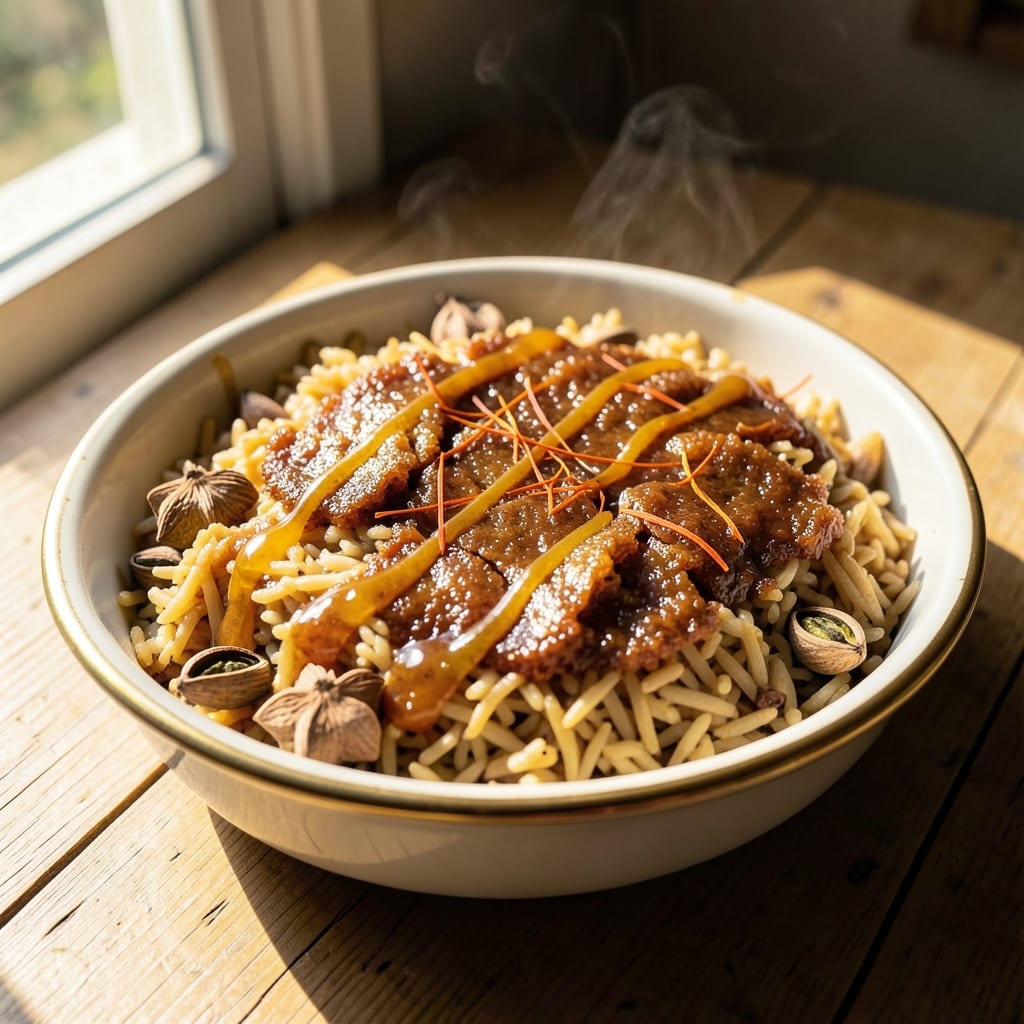
This Arabic sweet rice recipe transforms ordinary rice into a fragrant, golden masterpiece that’s been gracing Middle Eastern tables for centuries. The secret lies in layers of saffron-infused rice, caramelized sugar, and a delicate pomegranate glaze that adds a burst of tart-sweet contrast. Every bite delivers a perfect balance of textures—crispy edges, tender grains, and crunchy nuts—all infused with floral notes from rosewater and orange blossom water.
The process begins with soaking the rice to achieve that signature crunchy exterior, then carefully layering it with sugar and spices before steaming to perfection. Cardamom and cinnamon add warmth, while saffron weaves its signature golden hue and earthy aroma throughout. This isn’t just dessert—it’s a celebration, often served at weddings, Eid, or festive gatherings where its rich flavors and vibrant presentation steal the show.
What makes this recipe truly special is the pomegranate glaze, which ties everything together with its vibrant color and tangy-sweet profile. The nuts—pistachios and almonds—add texture and richness, while the floral waters elevate the dish from ordinary to extraordinary. Whether you’re preparing it for a special occasion or simply treating yourself, this sweet rice is a labor of love that rewards with every bite.
The best part? Once you master the technique, you can adapt it with different nuts, fruits, or even a splash of vanilla for a modern twist. Let’s bring this Arabic sweet rice to life—your taste buds (and guests) will thank you.
Ingredients for arabic sweet rice
Sixteen ingredients for a dessert that feels like a celebration.
| Ingredient | Amount | Notes |
|---|---|---|
| Long-Grain Basmati Rice 🍚 | 2 cups | Uncooked, rinsed thoroughly |
| Granulated White Sugar 🍚 | 1 ½ cups | Fine grain preferred |
| Saffron Threads 🌼 | ¼ tsp | High-quality, crushed |
| Rosewater 🌹 | 1 tbsp | Pure, food-grade |
| Orange Blossom Water 🍊 | 1 tbsp | Authentic Middle Eastern |
| Ground Cardamom 🌿 | 1 tsp | Freshly ground preferred |
| Ground Cinnamon 🌿 | ½ tsp | Ceylon preferred |
| Salted Butter 🧈 | ½ cup | Cold, cubed |
| Pistachios 🥜 | ½ cup | Shelled, roughly chopped |
| Slivered Almonds 🥜 | ½ cup | Toasted lightly |
| Pomegranate Molasses 🍇 | ¼ cup | Thick, not syrup |
| Fresh Pomegranate Seeds 🍇 | ½ cup | For garnish |
| Unsalted Butter 🧈 | 2 tbsp | Melted for glaze |
| Water 💧 | 3 ½ cups | Room temperature |
The saffron is non-negotiable here—look for Iranian or Spanish saffron at specialty markets or online. Whole Foods carries it in their spice aisle, but Penzeys offers the highest quality. Freshly ground cardamom and Ceylon cinnamon make all the difference, so skip the pre-ground blends if possible. For the floral waters, Middle Eastern grocery stores are your best bet—avoid the imitation versions. Pistachios and almonds should be toasted lightly before adding to prevent sogginess, and Costco's bulk nuts are perfect for this recipe. Pomegranate molasses is thicker than syrup, so if yours is runny, reduce it on the stove first.
No saffron? Turmeric at half the amount gives color, but the flavor won't be the same. Short on rosewater? Orange blossom water alone works, but the floral balance will shift. For the nuts, walnuts or cashews are great substitutes—just toast them first. If you can't find pomegranate molasses, reduce pomegranate juice with sugar until it thickens. The butter matters too—use European-style butter for richer flavor. For the rice, jasmine rice works in a pinch, but basmati gives that signature texture. And if you're feeling adventurous, swap half the sugar for date syrup for a deeper caramel note.
The rice keeps its crunch best if made fresh, but you can reheat portions in a 350°F oven for 10 minutes. Store leftovers in an airtight container with a paper towel to absorb moisture—good for 3 days. The pomegranate glaze can be made a day ahead and reheated gently. For serving, arrange the rice in a large platter and drizzle the glaze artistically. The nuts and pomegranate seeds add texture and color, so don't skip them—they're what makes this dish visually stunning. Freeze the glaze separately for up to 3 months if you want to prep ahead.
Why You'll Love This Recipe
- No-Soaking Needed: I swear by this trick—just rinse the basmati once, then let it sit in the sugar and warm water while you prep the rest. No overnight soaking, no fuss. The rice absorbs the sweetness as it cooks, so it’s always perfectly tender.
- Saffron Magic: That one teaspoon of saffron threads? It turns ordinary rice into something luxurious. I’ll be real: it’s the most expensive part, but honestly, the golden hue and floral depth make it worth every penny—even if you only use half.
- Weeknight to Celebration: Same rice, endless uses. Serve it plain as a dessert with tea, pile it under grilled chicken for a sweet-savory twist, or pack it in lunchboxes—kids love the floral kick. (Yes, even on a Tuesday night.)
- Budget Sweetness: A whole batch costs less than takeout dessert. The sugar and water base stretch far, and a little saffron goes a long way. Plus, rosewater and orange blossom water? You’ll use them up before they spoil—no wasted pantry items here.
Step-by-step instructions for saffron-infused crunch with pomegranate glaze
Here's how to create this fragrant, golden rice with its signature crunchy topping and luscious glaze.
Infuse the Rice with Saffron and Spices
In a large saucepan, combine the 2 cups long-grain basmati rice with the 3.5 cups room temperature water. Bring to a boil over medium-high heat until it reaches a rolling boil. Immediately reduce heat to low and stir in the 0.25 teaspoon saffron threads, 1 teaspoon ground cardamom, and 0.5 teaspoon ground cinnamon. Let it steep for 5 minutes—this is where the rice absorbs that signature floral saffron aroma and gentle spice warmth.
Here's the thing—don't skip the steeping time. The saffron needs those 5 minutes to fully infuse the rice with its golden hue and delicate flavor. After steeping, stir in the 1 tablespoon rosewater and 1 tablespoon orange blossom water. These floral notes will become the aromatic heart of your dish. Cover the pan and let it simmer gently for 15 minutes, then uncover and cook for another 10 minutes until all the liquid has been absorbed and the rice is tender but still slightly firm to the bite.
Layer and Toast the Nut Topping
While the rice cooks, prepare the nut topping by spreading the 0.5 cup pistachios and 0.5 cup slivered almonds on a baking sheet. Toast them in a 350°F oven for 8-10 minutes until they're fragrant and just beginning to turn golden. Watch them closely—they should be lightly toasted, not burnt. Remove them from the oven and set aside to cool slightly while you finish the rice.
This toasting step is crucial for developing the nutty depth of flavor that contrasts beautifully with the sweet rice. I like to press down gently on the nuts during the first few minutes of toasting to ensure even browning. Once they're cooled, roughly chop the pistachios if they're not already chopped, and set them aside with the almonds.
Fold in Butter and Prepare the Pomegranate Glaze
Once the rice is fully cooked, remove it from heat and let it sit covered for 5 minutes. This resting period allows the rice to finish steaming and develop its signature texture. Then, gently fold in the 0.5 cup cold salted butter using a fork or wooden spoon. The butter should melt into the rice, creating a rich, velvety texture. If the rice feels dry, add 1-2 tablespoons of water to restore moisture.
In a small saucepan, combine the 0.25 cup pomegranate molasses with the 2 tablespoons melted unsalted butter. Warm this mixture over low heat for 3-4 minutes, stirring constantly until it becomes smooth and glossy. The molasses should thicken slightly, creating the perfect glaze for your rice. Remove from heat and set aside.
Assemble and Garnish for Presentation
Transfer the buttery rice to a serving dish and spread the pomegranate glaze evenly over the top. The glaze should coat the rice beautifully, giving it that signature shiny finish. Sprinkle the toasted pistachios and slivered almonds evenly over the rice, pressing them gently into the surface so they stay in place. Finally, scatter the 0.5 cup fresh pomegranate seeds over the top for a pop of color and freshness.
Let the rice sit for 10 minutes before serving—this allows the flavors to meld together and the glaze to set slightly. The contrast between the warm, spiced rice, the crunchy nut topping, and the sweet-tart glaze is what makes this dish truly special. Serve it warm, perhaps with a dollop of whipped cream or a scoop of vanilla ice cream for an extra indulgent treat.
Pro Tips For Making Arabic Sweet Rice
- Bloom the Saffron: Crush the saffron threads between your palms first—this releases the color and aroma before they hit the water. I used to toss them in whole and wondered why my rice looked pale; now it’s golden every time. Use just ½ cup warm water to steep them for 5 minutes while you prep the rest. ---
- Toast the Rice First: Dry-toast the basmati in a pot over medium-high for 2–3 minutes until it smells nutty. This step prevents mushiness later. Skip it, and you’ll end up with sticky rice instead of fluffy, fragrant grains—trust me, I’ve made that mistake. ---
- Sweeten Last, Not First: Add the sugar after the rice has absorbed the liquid and turned fluffy. Dumping it in early turns the rice into syrup. Stir it in gently once the rice is cooked, then let it sit covered for 10 minutes—this lets the sugar caramelize just enough without burning. ---
- Use Both Floral Waters: Rosewater and orange blossom water are a team—don’t substitute one for the other. Start with 1 teaspoon of each, then adjust to taste. Too much? The rice tastes soapy. Too little? It lacks depth. I learned this after a disastrous batch where I only used rosewater.
Pro cooking tips for perfect results
Soak for Crunch
For that signature crispy exterior, soak your 2 cups basmati rice in room temperature water for 30 minutes before cooking. This hydrates the grains evenly, preventing mushiness while creating the perfect crunch when layered with sugar. I like to use a fine-mesh strainer to rinse the rice thoroughly—this removes excess starch that can make the rice gummy. 💧
Layer Sugar Perfectly
The key to caramelized edges is spreading the 1.5 cups sugar evenly in a thin layer over the drained rice before steaming. Use a fine-mesh sieve to distribute it uniformly—this prevents clumps that can burn. I press down gently with a damp paper towel to help the sugar melt evenly during the 45-minute steaming phase. This creates that signature golden crust while keeping the interior tender.
Steam with Precision
Use a bamboo steamer basket lined with cheesecloth to steam the rice over simmering water. Maintain a gentle low heat—never boiling—to ensure even cooking. I place a towel-lined lid on top to trap steam and create that signature crunchy top layer. The rice is done when the outer edges are crispy and the center remains slightly firm to the bite. 🌡️
Butter Timing Matters
Fold in the 0.5 cup cold salted butter immediately after steaming while the rice is still hot. The butter should melt into the grains, creating a luxurious texture. If the rice feels dry, add 1-2 tablespoons water to restore moisture. I always use European-style butter for its higher fat content and richer flavor—it makes all the difference in the final result.
Glaze Consistency Check
For the pomegranate glaze, simmer the 0.25 cup molasses with 2 tbsp butter until it reaches a thick, pourable consistency (about 3-4 minutes). Test by dipping a spoon in—it should coat the back smoothly but not drip excessively. If too thin, simmer longer; if too thick, add ½ tsp water to loosen. The glaze should be glossy and cling to the rice beautifully. 🍇
Nut Toasting Secrets
Toast the pistachios and almonds in a 350°F oven for 8-10 minutes, shaking the pan every 2 minutes for even browning. Remove them just as they begin to turn golden—they should smell fragrant, not burnt. Let them cool completely before chopping to prevent steam from making them soggy. I like to press them gently into the rice after glaze application so they stay in place during serving.
Nutrition facts
Frequently Asked Questions
Can I make this sweet rice without saffron?
Yes, but the flavor and color will differ. Use ½ teaspoon turmeric for color, though it won't replicate saffron's floral aroma. For the best alternative, try ½ teaspoon annatto powder—it adds a mild orange hue without overpowering the dish. The texture and sweetness will remain the same, but the signature golden color will be lost.
How do I store leftovers to keep them crispy?
Store the rice in an airtight container with a paper towel on top to absorb moisture. Reheat portions in a 350°F oven for 10-12 minutes—this restores the crunch. For the glaze, store it separately in the fridge for up to 3 months and reheat gently before drizzling. Never microwave leftovers, as this makes the rice soggy.
Can I substitute orange blossom water with vanilla?
Yes, but the flavor profile will change. Use 1 teaspoon vanilla extract instead of the orange blossom water for a sweeter, more familiar taste. The floral notes will be milder, but the dish will still be delicious. For a compromise, mix ½ teaspoon vanilla with ½ tablespoon rosewater to retain some floral complexity.
Why does my rice turn out mushy?
Overcooking or insufficient soaking usually causes mushiness. Always soak the rice for 30 minutes before cooking, and steam it for exactly 45 minutes—no longer. Use a bamboo steamer with cheesecloth to prevent excess moisture. Also, avoid stirring the rice while steaming, as this breaks the grains. If it feels dry, add 1-2 tablespoons water before steaming, not after.
What's the best way to serve this dish?
This sweet rice is traditionally served as a dessert or festive treat. Garnish with extra pomegranate seeds and a sprinkle of powdered sugar for elegance. Pair it with whipped cream, vanilla ice cream, or a scoop of mastic ice cream (a Middle Eastern specialty) for contrast. For a modern twist, serve it chilled with a drizzle of honey instead of the glaze.