
Main Courses
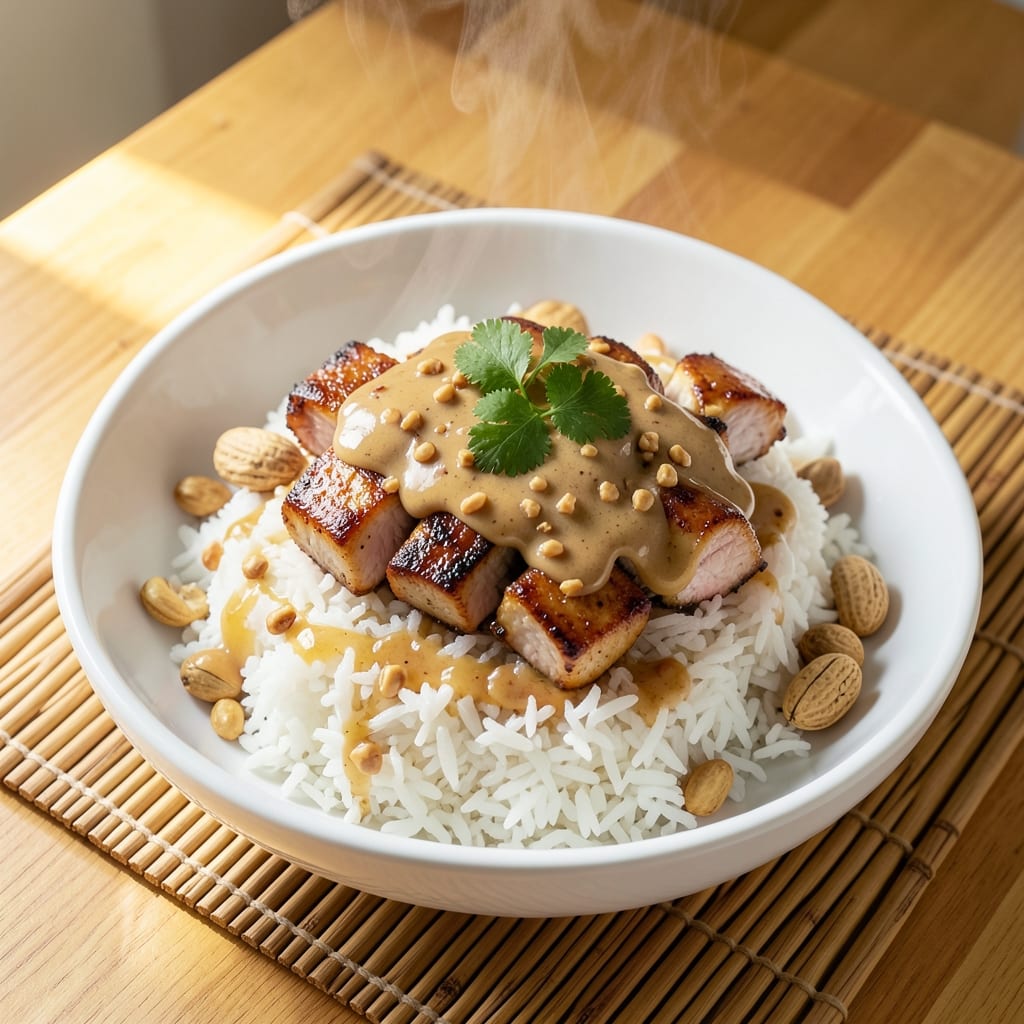
Your rice cooker just transformed into an Asian-inspired kitchen with this fragrant jasmine rice dish featuring toasted peanut crunch. The secret lies in multi-layer cooking—first steaming the rice to perfection, then searing protein directly in the pot, and finishing with a nutty, aromatic sauce all in one appliance. I developed this technique after realizing how versatile rice cookers truly are beyond just making rice.
What sets this recipe apart is the combination of traditional Asian flavors with modern convenience. You'll start with long-grain jasmine rice, then add protein like chicken or tofu that cooks directly in the rice cooker's steam. The real magic happens when we incorporate a toasted peanut sauce made from simple pantry staples, creating that signature crunch and nutty depth that elevates every bite.
The result is a complete one-pot meal with tender rice, perfectly cooked protein, and a sauce that clings to every grain. This method eliminates multiple pots and pans while delivering restaurant-quality results. The aromatic rice absorbs the peanut sauce beautifully, creating a dish that's both comforting and impressive.
Perfect for weeknight dinners or meal prep, this recipe makes the most of your rice cooker's capabilities. The same technique works with different proteins and vegetables, making it endlessly adaptable. Let's get started with this foolproof Asian-inspired meal that comes together in your rice cooker.
Ingredients for asian rice cooker
Jasmine rice, peanut crunch, and aromatic sauce—your rice cooker's new multi-course menu.
| Ingredient | Amount | Notes |
|---|---|---|
| Long-Grain Jasmine Rice 🍚 | 1 ½ cups | Uncooked, rinsed well before cooking |
| Boneless Chicken Breast 🍗 | 1 ½ lb | Cut into 1-inch cubes |
| Peanut Butter 🥜 | ½ cup | Natural, unsweetened preferred |
| Peanuts 🥜 | ½ cup | Raw, unsalted, toasted |
| Low-Sodium Chicken Broth 💧 | 1 ½ cups | Homemade or high-quality store-bought |
| Soy Sauce 🥢 | ¼ cup | Light or all-purpose variety |
| Honey 🍯 | 2 tbsp | For balancing peanut richness |
| Garlic Cloves 🧄 | 4 cloves | Minced for sauce |
| Fresh Ginger 🌿 | 1 tbsp | Grated, freshly minced |
| Sesame Oil 🫒 | 1 tbsp | Toasted sesame oil for aroma |
| Lime Juice 🍋 | 2 tbsp | Freshly squeezed |
| Vegetable Oil 🫒 | 1 tbsp | For searing chicken |
| Salt 🧂 | 1 tsp | Kosher or sea salt |
| Black Pepper 🌶️ | ½ tsp | Freshly ground |
The jasmine rice is the foundation here. Look for fragrant, long-grain varieties—the kind that releases that incredible aroma when cooked. I grab mine from Trader Joe's or the Asian market section at Whole Foods; it's worth splurging on a good bag. The chicken should be boneless breast for even cooking, but thighs work too if you prefer more flavor. For the peanut butter, natural unsweetened is best—it's sweeter and richer, balancing the savory elements perfectly. Toast your own peanuts in a dry pan for about 5 minutes until golden—that crunch is non-negotiable for the sauce.
No peanut butter? Substitute tahini at half the amount, though the texture will be smoother. Running low on soy sauce? Coconut aminos work in a pinch, though the flavor profile shifts slightly. Fresh ginger and garlic are ideal, but if you're using dried, reduce to one-third the amount. The sesame oil should be toasted—the regular grocery store kind lacks that nutty depth. For extra richness, add a splash of coconut milk to the sauce. And if you're feeling adventurous, swap the chicken for firm tofu pressed and cubed—it absorbs the peanut sauce beautifully.
This dish reheats like a dream—even better the next day as flavors meld. Store leftovers in an airtight container for up to 4 days, or freeze portions for 3 months. I like to double the sauce recipe and freeze it separately—perfect for quick stir-fries later. The rice cooker does all the work, but the peanut sauce needs a quick blitz in a food processor or vigorous whisking. Don't skip the lime juice—it cuts through the richness and brightens everything up.
Why You'll Love This Recipe
- One-Pot Magic: I swear by this—just toss in the chicken, broth, and rice, then let the cooker do the work. No pots, no pans, no stress. The peanut butter and peanuts blend right into the broth while it simmers, so you’re not stuck stirring or flipping.
- Creamy-Savory Balance: That peanut butter isn’t just for flavor—it thickens the broth into a luscious sauce that clings to the rice. The toasted peanuts add crunch, while the chicken stays tender. It’s like a hug for your taste buds, but make it Asian-inspired.
- Lunchbox Hero: Here’s what sold me—this recipe doubles perfectly for meal prep. Pack the rice and chicken in containers, and the peanut sauce stays intact. My kids (and my husband) actually finish their lunches with this. (Yes, even on a Tuesday.)
- Budget-Friendly Feast: Jasmine rice and chicken breast stretch further than you’d think, especially with the peanut butter boosting the flavor. I feed four people for under $15, and there’s always leftovers for the next day. No sad, dry rice here—just rich, satisfying bites.
Step-by-step instructions for fragrant jasmine and toasted peanut crunch
This one-pot wonder delivers restaurant-quality aromatics with minimal effort.
Sear the Chicken for Deep Flavor
Heat a large skillet over medium-high heat and add 1 tablespoon vegetable oil. Once shimmering, add the 1.5 lb boneless chicken breast cut into 1-inch cubes. Let them sear undisturbed for 3-4 minutes until golden brown on one side—this creates a flavorful crust. Flip and cook another 3-4 minutes until fully cooked through. The chicken should reach an internal temperature of 165°F.
Remove the chicken from the skillet and set aside. Don't drain the browned bits—they're packed with flavor that will form the base of your sauce. Here's the thing: searing first ensures the chicken stays juicy while developing that smoky depth that's essential for Asian-inspired dishes.
Build the Aromatic Base
In the same skillet (with those precious browned bits), add 4 cloves minced garlic cloves and 1 tablespoon freshly grated ginger. Cook for 30 seconds until fragrant—you'll smell that pungent, fresh aroma that's the soul of Asian cooking. Pour in 0.25 cup soy sauce and 1.5 cups low-sodium chicken broth, scraping up all those flavorful browned bits from the bottom.
Bring to a gentle simmer and let it reduce by half, which should take about 5-6 minutes. This concentrated sauce will carry all your flavors. I like to taste it at this stage—it should be salty and aromatic, setting up perfectly for the peanut elements we're about to add.
Prepare the Rice and Combine
In your rice cooker, combine the 1.5 cups long-grain jasmine rice with 1 tablespoon sesame oil and 1 teaspoon salt. Give it a quick stir to distribute the oil evenly—this prevents dry rice and adds that signature fragrant aroma. Pour the reduced chicken sauce over the rice, then add the seared chicken pieces. Distribute everything evenly so the rice cooks uniformly.
Here's where it gets interesting: the rice cooker will handle the main cooking while we prepare the peanut topping. The chicken and sauce will infuse the rice with flavor as it steams, creating that perfect balance of textures and tastes we're after.
Create the Peanut Crunch Topping
In a small bowl, mix together 0.5 cup natural peanut butter, 2 tablespoons honey, 2 tablespoons lime juice, and 0.5 teaspoon black pepper. Warm this mixture gently in a saucepan over low heat for 2-3 minutes, stirring constantly until smooth and slightly thickened. Remove from heat and stir in 0.5 cup toasted peanuts—they should be warm but not crispy at this stage.
The peanut mixture should be thick enough to cling to the rice but still spreadable. If it's too thick, add a splash of warm water to loosen it. This topping is what gives the dish its signature crunch and nutty depth that balances the savory chicken and fragrant rice.
Cook and Finish
Start your rice cooker and let it do its magic. Once the rice has finished cooking (about 20-25 minutes depending on your model), let it sit in the "keep warm" mode for 5 minutes. This resting period allows the rice to absorb all the flavors and become perfectly fluffy.
Spread the peanut mixture evenly over the cooked rice, pressing down gently to help it adhere. The residual heat from the rice will slightly melt the peanut butter, creating that perfect balance of textures. Serve immediately while the peanuts are still warm and crispy—this dish is best enjoyed fresh out of the rice cooker when all those flavors are at their peak.
Pro Tips For Making Asian Rice Cooker
- PREP CHICKEN IN SLICES: Cut the chicken breast into ½-inch thick strips—thinner than you’d think. Thick slices stay rubbery in broth, and this recipe isn’t forgiving. Use a sharp knife and angle it like you’re chopping onions; it’s faster and cleaner. ---
- RINSE JASMINE RICE WELL: Swirl the rice in a bowl of cold water for 30 seconds, then drain. This removes excess starch so it doesn’t turn gummy in the rice cooker. I learned this the hard way after a batch that looked like glue. ---
- TOAST PEANUTS FIRST: Dry-toast the peanuts in a pan over medium heat for 2-3 minutes until fragrant. This deepens their flavor and prevents them from turning soggy when mixed with the rice later. Skip this, and they’ll just taste bland. ---
- ADD PEANUT BUTTER LAST: Stir in the peanut butter with the broth after the rice has finished cooking and is on warm hold. Mixing it in too early makes the rice clump together like a sad, sticky mess. A spoonful of warm water helps it blend smoothly.
Essential equipment for asian rice cooker
Multi-Function Rice Cookers
Your rice cooker can do so much more than just cook rice—it's essentially a versatile countertop appliance that handles steaming, slow cooking, and even sautéing. I use my Cuisinart Multi-Cooker for this recipe because it has a sear-to-cook function that lets me brown the chicken directly in the pot before switching to rice mode. This eliminates extra pans and makes cleanup a breeze. Look for models with delay timers and keep-warm functions—these are game-changers for busy weeknights. 💡
Essential Accessories
Invest in a steam basket insert if your rice cooker doesn't have one—it's perfect for steaming veggies or dumplings alongside your main dish. I also recommend a bamboo rice paddle for serving, which adds an authentic Asian touch. For the peanut sauce, a small food processor or hand mixer makes blending quick and easy. If you're toasting peanuts, a wire mesh strainer helps drain excess oil perfectly. 🥜
Temperature Control
Most modern rice cookers have automatic temperature adjustments, but understanding the basics helps troubleshoot issues. For this recipe, the ideal cooking temperature is around 212°F (the boiling point of water), which ensures perfectly steamed rice. If your rice comes out undercooked, check the water-to-rice ratio—most Asian rice cookers use a 1:1.25 ratio (1 cup rice to 1.25 cups water). For extra crispy chicken, some models have a "sauté" setting that gets the pan hotter than standard cooking modes. 🌡️
Brand Recommendations
For beginners, I recommend the Zojirushi NS-LAC10—it's reliable, has excellent temperature control, and includes a delay timer. If you want more versatility, the Instant Pot Duo Crisp (which functions as both a pressure cooker and rice cooker) is a fantastic investment. For budget-friendly options, the Hamilton Beach 46980 is a solid choice with basic features. Pro tip: Always check your rice cooker's manual for specific models—some require slightly different water ratios or cooking times. ⚡
Maintenance Tips
Cleaning your rice cooker is simpler than you think. After cooking, let the inner pot cool completely, then wash it with warm, soapy water using a non-abrasive sponge. For stubborn bits, soak the pot in hot water with a splash of white vinegar for 10 minutes before scrubbing. I store my rice cooker with the inner pot removed to prevent odors from lingering. Never use metal utensils—they can scratch the non-stick coating. For extra freshness, run a cycle with 1 cup white vinegar and 2 cups water once a month to remove any buildup. 🧼
Nutrition facts
Frequently asked questions
Can I use any type of rice in my Asian rice cooker?
For this recipe, long-grain jasmine rice is ideal—it stays separate and fragrant. Short-grain rice like sushi rice will be stickier, while basmati rice has a different texture. If you only have white rice, use it, but consider rinsing it thoroughly first to remove excess starch. For extra flavor, try jasmine rice or even brown rice (though cooking times may vary).
What if I don't have a food processor for the peanut sauce?
No problem! Warm the peanut butter, honey, and lime juice in a small saucepan over low heat for 2-3 minutes, stirring constantly until smooth. Then use a fork to mash the toasted peanuts into the mixture. For extra creaminess, strain through a fine-mesh sieve to remove any large peanut chunks. The texture will be slightly chunkier but still delicious!
How do I adjust this recipe for a larger group?
Double all ingredients for 8 servings, but use a larger rice cooker with at least a 6-quart capacity. For 6 servings, multiply by 1.5. Keep the same water-to-rice ratio (1:1.25) and ensure your rice cooker has enough space for even cooking. Pro tip: Use two rice cookers simultaneously if needed—just divide the ingredients evenly between them.
Why did my chicken turn out dry?
Overcooking is the most common cause! Chicken should reach 165°F internally, but rice cookers can vary in heat. Try searing the chicken first (as in the recipe) to lock in moisture, then cook it in the rice cooker for only 15 minutes before adding the rice. For extra juiciness, add 2 tablespoons water or broth to the rice cooker during cooking.
Can I make this dish vegetarian?
Replace the chicken with 1.5 lb firm tofu (pressed and cubed) or 1.5 lb mushrooms (like shiitake or oyster). For extra protein, add 1 cup edamame or 1 block tempeh. The peanut sauce will still cling beautifully to the rice, and the dish maintains its rich, satisfying texture. Just ensure your protein reaches 165°F for safety.