
Side Dishes
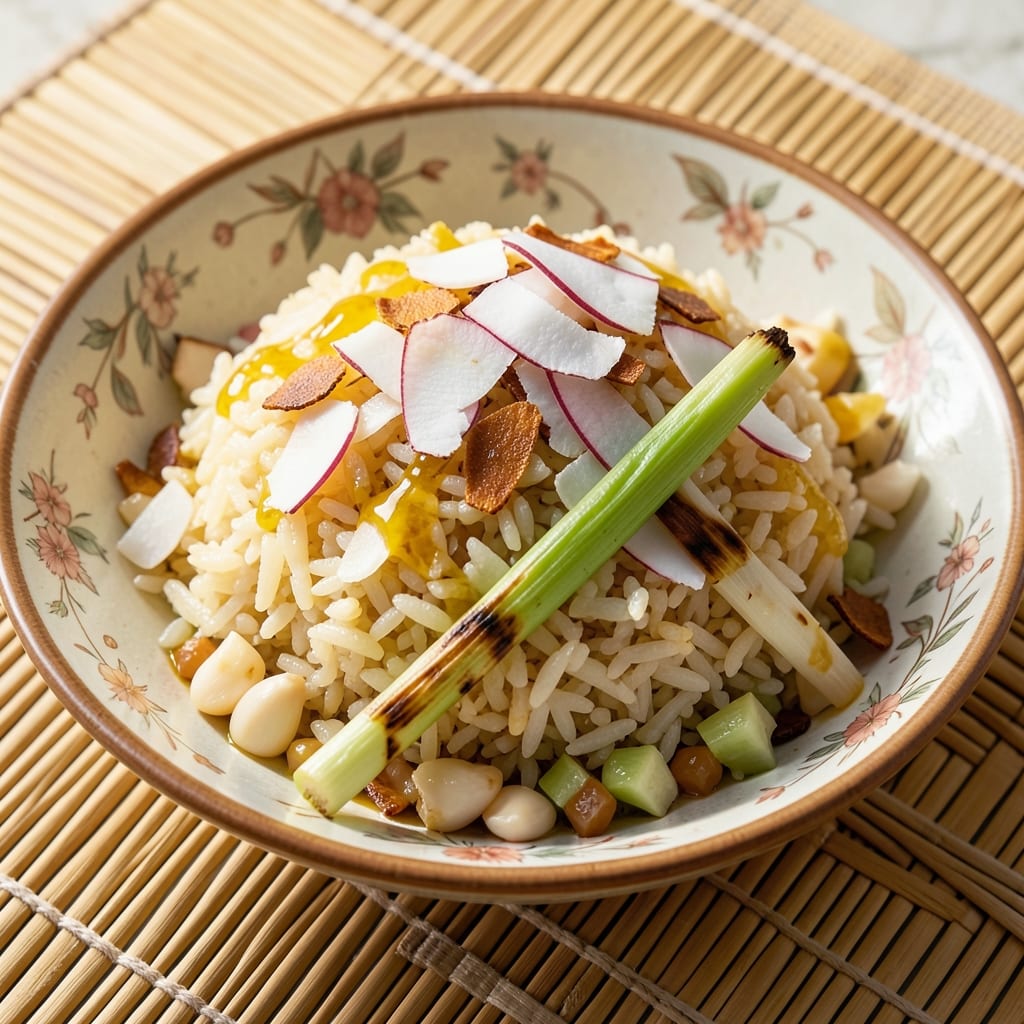
This Asian rice pilaf recipe transforms simple jasmine basmati into a fragrant, textured masterpiece with toasted coconut crunch. The secret lies in slow-toasted aromatics—ginger, garlic, and lemongrass—simmered until their oils infuse the rice with deep, aromatic warmth. Unlike plain white rice, this version builds flavor in layers, starting with a crispy coconut base that adds both texture and a subtle sweetness. The cooking method is straightforward but precise: toast the rice in oil until golden before adding liquid, ensuring each grain absorbs the aromatic broth perfectly. Coconut milk adds richness, while a final sprinkle of toasted coconut and lime zest elevates the dish from side to something extraordinary. It’s the kind of pilaf that pairs beautifully with grilled proteins or stands alone as a satisfying meal. What makes this recipe special is its adaptability—swap chicken for tofu, adjust spice levels with chili oil, or use vegetable broth for a lighter version. The result is always the same: fragrant, slightly sticky rice with pockets of toasted coconut that add a delightful crunch in every bite. It’s restaurant-quality without the fuss. Perfect for weeknight dinners, potlucks, or meal prep, this pilaf keeps well for days and tastes even better reheated. Let’s get started!
Ingredients for asian rice pilaf
Jasmine rice, toasted coconut, and fragrant aromatics create this restaurant-quality pilaf.
| Ingredient | Amount | Notes |
|---|---|---|
| Jasmine Basmati Rice 🍚 | 1 ½ cups | Uncooked, long-grain preferred |
| Unsweetened Coconut Flakes 🥥 | ½ cup | Toasted until golden brown |
| Shallots 🧅 | 2 whole | Minced finely for aromatic base |
| Garlic Cloves 🧄 | 4 cloves | Minced for aromatic depth |
| Fresh Ginger 🌿 | 1 tbsp | Finely grated, aromatic kick |
| Lemongrass Stalks 🌿 | 2 whole | Bruised and cut into 1-inch pieces |
| Light Coconut Milk 🥥 | 1 ½ cups | High-quality canned preferred |
| Vegetable Broth 💧 | 2 cups | Low-sodium for flavor control |
| Extra-Virgin Olive Oil 🫒 | 2 tbsp | For toasting rice and aromatics |
| Lime Zest 🍋 | 1 tbsp | Freshly grated for bright finish |
| Salt 🧂 | 1 tsp | Kosher or sea salt preferred |
| Ground Black Pepper 🌶️ | ¼ tsp | Freshly ground for subtle heat |
| Red Chili Flakes 🌶️ | ½ tsp | Optional, adjust to taste |
| Fresh Cilantro 🌿 | ¼ cup | Chopped, for garnish and freshness |
The quality of your rice and coconut makes all the difference. Jasmine basmati should be long-grain and plump—Lotus Foods or Mahatma brands are my go-tos, but any high-quality basmati works. For the coconut, unsweetened flakes are essential (sweetened won’t toast properly). Toast them in a dry pan until golden, then set aside—this adds the signature crunch. The aromatics—shallots, garlic, ginger, and lemongrass—should be fresh. Asian markets often carry pre-bruised lemongrass, but if you’re buying stalks, give them a few good whacks with the side of your knife to release their oils. The coconut milk? High-quality canned brands like Thai Kitchen ensure no watery aftertaste.
No lemongrass? Substitute 1 tbsp lime zest plus 1 tsp lime juice—it’s not identical, but close. Running low on coconut milk? Diluted coconut cream (1:1 with water) works in a pinch. The vegetable broth can be swapped for chicken broth for extra richness, though keep it low-sodium. For a lighter version, use half coconut milk and half water. The red chili flakes are optional, but if you skip them, add an extra pinch of salt to balance. Fresh cilantro is ideal, but dried cilantro at one-third the amount works if you’re in a bind. Just remember: dried herbs are more potent, so start small.
This pilaf reheats beautifully—just add a splash of water or broth and cover tightly. Keeps in the fridge for 4-5 days or frozen for 3 months. For meal prep, portion into containers with a sprinkle of toasted coconut on top—it keeps the crunch intact. The rice will firm up slightly when chilled, but a quick steam or microwave session brings it back to perfect texture. Store the coconut flakes separately if you want to add them fresh before serving—they lose crunch when refrigerated.
Why You'll Love This Recipe
- One-Pot Magic: I swear by this recipe—just toss everything in one pot, simmer, and walk away. No fancy equipment, no stressing over layers or timers. The jasmine rice soaks up the shallot-garlic-ginger base like a sponge, and those toasted coconut flakes add crunch without extra effort.
- Toasty Crunch Factor: That crispy edge from the coconut flakes? It’s the secret weapon. I’ll be real: I started adding them just because I had a bag in the pantry, but now I double-check the recipe to make sure they’re in there. The ginger and garlic give it a warm, aromatic kick that lingers—like a hug in every bite.
- Weeknight Workhorse: This pilaf shows up for everything. Serve it alongside grilled chicken for a quick dinner, pile it into bento boxes for lunch, or bring it to potlucks—no one will guess it’s as simple as it is. Honestly, I’ve even microwaved leftovers straight from the fridge, and it’s still solid.
- Budget-Friendly Staple: Jasmine rice and coconut flakes stretch my grocery budget without sacrificing flavor. A single batch feeds four, and the leftovers reheat beautifully—no mushy rice here. Between us, this is the kind of dish that makes me feel like I’m cooking fancy, even when I’m just throwing together a weeknight meal.
Step-by-step instructions for fragrant Asian rice pilaf
Here's how to create restaurant-quality jasmine basmati pilaf with aromatic depth and coconut crunch.
🍳 Step 1: Toast the Coconut Flakes and Aromatics
Heat a dry skillet over medium heat and add the 0.5 cup unsweetened coconut flakes. Toast for 3-4 minutes, stirring constantly, until they turn golden brown and release a nutty aroma. Remove from heat and set aside in a small bowl.
In the same skillet, add the 2 tablespoons extra-virgin olive oil and heat until shimmering. Add the 2 minced shallots and cook for 2 minutes until softened. Add the 4 minced garlic cloves and 1 tablespoon finely grated ginger, cooking for another 30 seconds until fragrant. Finally, add the 2 bruised lemongrass stalks and cook for 1 minute to release their citrusy oils.
🍳 Step 2: Toast the Jasmine Basmati Rice
Add the 1.5 cups jasmine basmati rice to the skillet and stir to coat evenly in the aromatic oil. Toast for 2-3 minutes, stirring frequently, until the grains turn slightly translucent at the edges. This toasting step develops the rice's nutty flavor and prevents mushiness.
I press down gently on the rice with a spatula during the last minute of toasting—this ensures even contact with the hot oil and prevents the rice from sticking together. You'll see the edges start to crisp—that's your signal to move to the next step.
🥘 Step 3: Build the Flavor Base
Pour in the 1.5 cups light coconut milk and 2 cups vegetable broth, stirring to combine. Add the 1 tablespoon lime zest, 1 teaspoon salt, 0.25 teaspoon ground black pepper, and 0.5 teaspoon red chili flakes. Bring to a gentle boil over medium-high heat, then immediately reduce heat to low.
The mixture should simmer gently—you'll see small bubbles forming around the edges. If it boils vigorously, reduce the heat further. This gentle simmer ensures even cooking and prevents the rice from becoming gummy. Cover the skillet with a tight-fitting lid and let it cook undisturbed.
⏰ Step 4: Steam the Rice to Perfection
Cook for 15 minutes without lifting the lid. The rice should absorb the liquid and become tender but still slightly firm to the bite. If you peek and see liquid remaining, cover again and cook for another 2-3 minutes—the residual heat will finish the cooking process.
Here's the thing—jasmine basmati rice has a tendency to finish cooking after you remove it from heat. For this reason, I prefer it slightly underdone when it comes off the stove. The texture will firm up beautifully as it rests.
👨🍳 Step 5: Fluff and Finish
Remove the skillet from heat and let it sit covered for 5 minutes. Then, using a fork, gently fluff the rice to separate the grains. Fold in the toasted coconut flakes and 0.25 cup chopped fresh cilantro, distributing them evenly throughout.
For the final touch, I like to give the rice a taste and adjust seasoning if needed. The lime zest should add a bright citrus note, the chili flakes a subtle heat, and the coconut flakes a delightful crunch. Serve immediately while still warm, or cover and keep warm in a low oven until ready to serve.
Pro Tips For Making Asian Rice Pilaf
- Toast the Coconut First: I learned this the hard way—adding raw coconut flakes straight to the pot makes them soggy and flavorless. Dry-toast them in a separate pan over medium heat for 2-3 minutes until golden and fragrant, then stir them into the rice at the very end. That crispy texture and nutty aroma are the thing that matters most.
- Mince the Ginger Fine: Skip the grating, skip the chunks—this isn’t a stir-fry, it’s a pilaf. Use a sharp knife to finely mince the ginger into a paste (almost like a wet sand consistency). It blends better, cooks faster, and won’t leave you with chewy bits that ruin the texture.
- Use a 1:1.5 Rice-to-Liquid Ratio: Jasmine basmati needs room to breathe, but not too much. For every cup of rice, use 1.5 cups of liquid (broth or water). Too little and it dries out; too much and it turns mushy. I know, I know—it’s tempting to eyeball it, but trust the ratio.
- Layer the Aromatics Last: Sauté shallots, garlic, and ginger together until fragrant, but don’t let them brown—just soften. Then, spread the rice evenly over the top and pour in the liquid. This ensures every grain gets coated in flavor instead of sitting at the bottom like a sad, flavorless lump. (Yes, even if you’re impatient like me.)
Health benefits of this asian rice pilaf
Rich in Complex Carbs
This fragrant jasmine basmati pilaf delivers high-quality complex carbohydrates that fuel your brain and body with sustained energy. A 1-cup serving provides about 45 grams of carbs, with 3.5 grams of fiber to support digestion. The slow-release energy from these carbs makes it perfect for balanced meals, especially when paired with protein-rich main dishes like grilled chicken or tofu. 💪
Plant-Based Protein Boost
While not a protein powerhouse on its own, this pilaf incorporates toasted coconut flakes and optional additions like edamame or chickpeas to boost plant-based protein. A ½-cup serving of the coconut alone contains about 2 grams of protein, while adding ½ cup cooked edamame adds another 9 grams. The combination creates a satisfying, protein-rich side that keeps you full longer.
Healthy Fats from Coconut
The star ingredient here is unsweetened coconut flakes, which provide medium-chain triglycerides (MCTs)—fats that your body converts quickly into energy. A 0.5-cup serving of toasted coconut contains about 12 grams of healthy fats, including lauric acid, which supports immune function. These fats also enhance the absorption of fat-soluble vitamins from other meal components. 🥥
Antioxidant-Rich Aromatics
The pilaf's aromatic base—ginger, garlic, and lemongrass—packs a punch of antioxidants that combat inflammation. Ginger contains gingerol, which aids digestion, while garlic provides allicin for immune support. Lemongrass adds citral, a compound with antimicrobial properties. Together, these ingredients create a flavor profile that's as beneficial for your health as it is for your taste buds.
Low-Calorie, High-Flavor
Despite its rich taste, this pilaf is surprisingly light on calories—about 250 calories per cup when made with vegetable broth. The secret lies in balancing the creamy coconut milk with broth and using minimal oil. The result is a dish that satisfies cravings without overloading your calorie intake, making it ideal for weight-conscious eaters who still want restaurant-quality flavor. ✨
Digestive Benefits
The combination of jasmine rice and ginger in this pilaf supports digestive health. Ginger's natural compounds stimulate digestion, while the rice provides gentle, easy-to-digest carbohydrates. For extra digestive support, you can stir in ½ teaspoon ground fennel seeds during the toasting phase—they add a subtle anise-like flavor while aiding digestion. This makes the pilaf especially comforting for those with mild digestive sensitivities.
Nutrition facts
Frequently asked questions
Can I use regular white rice instead of jasmine basmati?
While you can substitute, jasmine basmati is ideal because its long grains stay separate and absorb flavors beautifully. Regular white rice may turn out sticky or mushy. If you must use it, try a medium-grain variety like Calrose and reduce the liquid by ¼ cup—but expect less aromatic depth.
How do I make this pilaf spicier?
For extra heat, add 1-2 teaspoons of chili oil or ½ teaspoon of cayenne pepper when building the flavor base. You can also stir in ½ cup of diced fresh chili peppers (like Thai bird's eye or serrano) during the final fluffing step. Adjust to taste—Asian pilafs often balance sweet, sour, and spicy flavors!
What's the best way to reheat this pilaf?
Reheat gently in a skillet over low heat with 1-2 tablespoons of water or broth, covered for 3-5 minutes. Microwaving works too—cover with a damp paper towel and heat in 1-minute intervals, stirring between each. Avoid high heat to prevent drying out the rice.
Can I make this pilaf ahead of time?
This pilaf tastes even better the next day. Store in an airtight container in the fridge for up to 5 days. For serving, sprinkle fresh toasted coconut flakes on top just before eating to restore that perfect crunch. The flavors meld beautifully overnight!
What are good protein pairings for this pilaf?
This pilaf pairs wonderfully with grilled chicken breast, tofu, or shrimp. For a vegetarian option, try pan-seared tempeh or crispy chickpeas. The coconut and lime flavors complement seafood perfectly, while the aromatic rice balances rich meats beautifully.