
Main Courses
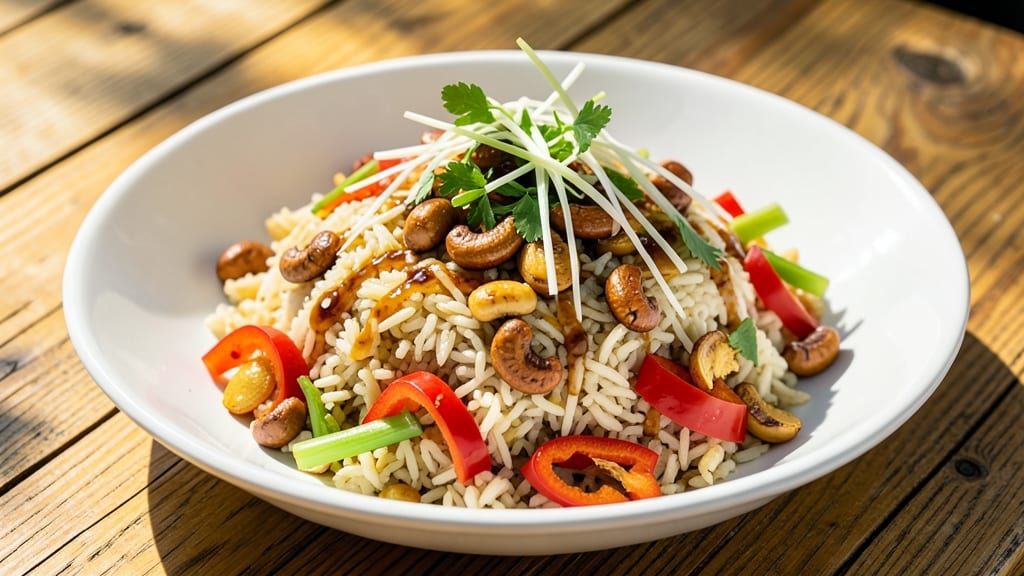
This cashew fried rice recipe transforms simple ingredients into a restaurant-worthy vegetarian dish with nutty creaminess and perfect texture. The secret lies in toasting cashews until golden and stir-frying at high heat to achieve that signature wok hei aroma.
I developed this version after years of perfecting the balance between crispy cashews, tender rice, and savory-sweet flavors.
What makes this recipe stand out is the foolproof technique that ensures crispy cashews and evenly cooked rice without sticking. Using pre-cooked rice saves time while maintaining the dish's integrity, and the simple sauce—made with soy sauce, sesame oil, and a touch of sugar—elevates every bite.
The result is a harmonious blend of textures and flavors that feels both comforting and sophisticated.
Ingredients for cashew fried rice
Fourteen ingredients, one technique—perfectly balanced nutty fried rice every time.
| Ingredient | Amount | Notes |
|---|---|---|
| Day-Old Cooked Jasmine Rice 🍚 | 4 cups | Cold or room temperature preferred |
| Raw Whole Cashews 🥜 | 1 cup | Unsalted, toasted until golden |
| Vegetable Oil 🫒 | 3 tbsp | High smoke point preferred |
| Tamari or Gluten-Free Soy Sauce 🥢 | 3 tbsp | High-sodium preferred for flavor |
| Toasted Sesame Oil 🫒 | 1 tbsp | For aroma, not cooking |
| Rice Vinegar 🍶 | 1 tbsp | White or seasoned variety |
| Granulated Sugar 🍯 | 1 tsp | Adjust to taste |
| Garlic Cloves 🧄 | 3 cloves | Minced, fresh preferred |
| Small Carrot 🥕 | 1 whole | Julienned, about 1/4 cup |
| Green Onion 🧅 | 3 whole | Thinly sliced, white and green parts |
| Fresh Ginger 🌿 | 1 tsp | Finely grated, about 1/4-inch piece |
| Diamond Crystal Kosher Salt 🧂 | ½ tsp | Adjust to taste |
| Freshly Ground Black Pepper 🌶️ | ¼ tsp | Freshly cracked preferred |
| Sesame Seeds 🌱 | 1 tsp | Toasted for garnish |
The foundation starts with jasmine rice, which must be day-old and cold—freshly cooked rice turns mushy. Trader Joe's or Whole Foods carry high-quality jasmine rice in bulk, but any long-grain variety works. For the cashews, raw and unsalted is critical—Costco or Amazon sell them in bulk for better value. Toast them in a dry pan until golden (about 5 minutes), then set aside immediately. The garlic and ginger should be freshly grated or minced—pre-minced jars lack the aromatic punch. Whole Foods carries organic ginger in small packages if you don't use it often.
No tamari? Gluten-free soy sauce works perfectly, or swap for coconut aminos for a subtler flavor. Short on sesame oil? Toasted sesame seeds (1 tsp) can mimic the aroma, though the oil's depth is irreplaceable. The sugar balances the saltiness—coconut sugar or maple syrup (½ tsp) are excellent substitutes. For the vegetables, julienned carrots add texture, but bell peppers or snap peas work equally well. If using pre-shredded carrots, rinse them first to remove excess moisture. The green onions should be thinly sliced—the white parts add a milder flavor, while the greens bring freshness.
Store pre-toasted cashews in an airtight container for up to 2 weeks to maintain crispness. The cooked fried rice reheats beautifully—microwave for 1-2 minutes with a splash of water to restore moisture. For best results, portion into single servings before refrigerating to prevent sogginess. Leftover rice freezes well for 3 months—thaw overnight in the fridge before reheating. Garnish with toasted sesame seeds right before serving to preserve their crunch.
Why You'll Love This Recipe
- No Chopping Nightmare: I keep a bag of pre-chopped veggies in the freezer just for this—no knife skills required. The cashews? Toss them whole into the pan, and they toast right alongside the rice, turning golden and nutty with zero effort.
- Crunchy-Creamy Magic: That first bite—crispy edges on the rice, soft cashews still warm from the oil, and a hit of toasted sesame oil that smells like a shortcut to happiness. Honestly, the tamari ties it all together with this deep, savory punch that makes takeout feel like a cheat code.
- Leftover Hero: This dish actually improves the next day. The flavors meld even better, and I’ve reheated portions for breakfast with a fried egg on top—no one ever complains. (Yes, even on a Tuesday night.)
- Budget Flexibility: Cashews are pricey, but you only need a handful to make it feel special. Use half the amount if needed, or swap in peanuts for a fraction of the cost—it’ll still taste like you splurged. One pan, one wok, and I’m done.
Step-by-step instructions for cashew fried rice
Transform simple ingredients into a restaurant-worthy dish with this precise method.
Toast the Cashews for Nutty Depth
Preheat your oven to 350°F and spread the 1 cup raw whole cashews in a single layer on a baking sheet. Toast for 8-10 minutes until they turn a rich golden brown and release an intoxicating aroma. This step is crucial—it enhances their natural sweetness and oil content, which will create that signature creamy texture without overpowering the dish.
Watch closely after 6 minutes as cashews burn quickly. Shake the pan occasionally for even toasting. Let them cool completely before using, as warm cashews will release excess oil during cooking. Once cooled, transfer them to a bowl and set aside—you'll pulse them later for the perfect texture.
Prepare the Aromatic Base
Heat 3 tablespoons vegetable oil in a large wok or skillet over medium-high heat until shimmering. Add the 3 cloves minced garlic and 1 teaspoon finely grated fresh ginger, stirring constantly for 30 seconds until fragrant but not browned. Garlic burns in seconds, so keep the heat moderate and watch closely.
Next, add the 1 whole small carrot julienned into thin strips. Stir-fry for 2-3 minutes until the carrots soften slightly but retain a crisp texture. Remove the vegetables from the pan and set aside—they'll return later, but this step prevents overcooking while building flavor. The pan should now have a light golden residue that forms the foundation of your sauce.
Build the Creamy Cashew Sauce
Increase heat to high and add the 1 cup toasted cashews to the wok. Pulse them in a food processor until they reach a coarse, sand-like texture—think 1-2 seconds of pulsing. Immediately pour them into the hot pan and stir vigorously for 1-2 minutes until they turn a rich golden color and release their oils.
This is where the magic happens. The cashews should coat the bottom of the pan and create a velvety texture. If they clump, add 1 tablespoon rice vinegar to help emulsify. Then stir in 3 tablespoons tamari or gluten-free soy sauce and 1 teaspoon granulated sugar, mixing until fully incorporated. The sauce should thicken slightly but remain pourable—this is the perfect consistency for coating each grain of rice.
Combine and Cook the Fried Rice
Add the 4 cups day-old cooked jasmine rice to the wok, breaking up any clumps with your spatula. Drizzle in 1 tablespoon toasted sesame oil and toss everything together for 2-3 minutes until the rice is evenly coated and heated through. The rice should be sizzling audibly—this indicates proper heat distribution and prevents dryness.
Return the previously set-aside carrots and garlic-ginger mixture to the pan. Stir in the 3 whole green onions sliced thinly, reserving the tops for garnish. Cook for an additional 1-2 minutes until everything is heated through and the rice takes on a slightly crispy texture around the edges. Season with 0.5 teaspoon diamond crystal kosher salt and 0.25 teaspoon freshly ground black pepper, adjusting to taste.
Finish and Serve with Precision
Remove the fried rice from heat and transfer to a serving platter. Immediately sprinkle with 1 teaspoon toasted sesame seeds and the reserved green onion tops. The contrast of textures—creamy cashew sauce, crispy rice edges, and crunchy sesame seeds—is what makes this dish exceptional.
Serve immediately while the rice is hot and the cashew sauce maintains its velvety consistency. Each bite should deliver a perfect balance of nutty richness, umami from the tamari, and bright acidity from the rice vinegar. For best results, use within 10 minutes of cooking, as the texture softens as it cools.
Pro Tips For Making Cashew Fried Rice
- CRACK THE CASHEWS FIRST: Whole cashews are stubborn—soak them in hot water for 10 minutes before chopping, or they’ll turn to sawdust. I learned this the hard way after ending up with a pile of powder instead of crunchy bits. A sharp knife and a cutting board work best; your fingers will thank you later.
- USE DRY RICE: Day-old rice is non-negotiable, but make sure it’s completely dry. Spread it on a tray and let it sit uncovered for 10 minutes before frying—this prevents a soggy, gluey mess. I used to skip this, and my fried rice always tasted like a sad, damp pile.
- STIR FAST AND LOW: High heat for the first 30 seconds to crisp the rice, then drop to medium-low. Cashews burn faster than you think, and once they’re golden, they darken in seconds. Keep the pan moving—crowding it means uneven cooking and a bitter aftertaste.
- SALT THE RICE BEFORE FRIED RICE: Toss your day-old rice with a pinch of salt (about ¼ tsp per cup) before frying. This balances the tamari’s saltiness and makes the grains pop. I was skeptical until I tried it—now it’s a habit. No need to overdo it, though; you’re adding more salt during cooking.
Regional styles of this recipe
Thai-Inspired Style
In Thailand, fried rice often incorporates red curry paste or lemongrass for depth. For this cashew version, add 1 teaspoon red curry paste when building the sauce and finish with 2 thin slices of lemongrass (bruised) and 1 tablespoon lime juice.
Garnish with cilantro instead of green onions for that authentic Thai touch. 🌶️
Japanese Umami Twist
Japanese-style fried rice relies on dashi broth and mirin for richness. Replace tamari with 2 tablespoons dashi powder dissolved in 2 tablespoons hot water, then add 1 tablespoon mirin and 1 teaspoon sake to the sauce.
Top with 1 teaspoon furikake (Japanese seasoning) and thinly sliced scallions for a lighter, more delicate flavor profile.
Korean Fusion Approach
Korean fried rice often includes gochujang (fermented chili paste) for heat and complexity. Stir in 1 teaspoon gochujang with the tamari and add 1 tablespoon toasted sesame seeds directly into the wok during the final stir-fry.
Garnish with thinly sliced Korean pear (½ cup) for natural sweetness and sesame oil drizzle to tie it all together.
Vietnamese-Inspired Version
For a Vietnamese-inspired take, add 1 tablespoon fish sauce (or soy sauce for vegetarian) and 1 teaspoon sugar to the sauce base. Incorporate ½ cup shredded cabbage (quick-pickled in rice vinegar) and 2 tablespoons chopped mint at the end.
Serve with a side of nuoc cham (Vietnamese dipping sauce) for dipping.
Chinese Regional Adaptation
In Cantonese-style fried rice, char siu (Chinese BBQ pork) is traditional—but here, swap it for ½ cup diced tofu pan-fried until crispy. Add 1 teaspoon oyster sauce to the sauce and garnish with crushed peanuts (2 tbsp) and chopped scallions.
This version keeps the dish vegetarian while embracing classic Chinese techniques.
Modern Fusion Idea
For a contemporary twist, blend ½ cup cashew sauce with 1 tablespoon peanut butter and 1 teaspoon sriracha to create a creamy, spicy drizzle. Top the fried rice with crushed peanuts (2 tbsp) and pickled jalapeños for a sweet-spicy kick.
This version works as a bold, flavorful main dish or a vibrant side. 🌟
Nutrition facts
Frequently asked questions
Can I use raw cashews instead of toasting them?
Toasted cashews add a deeper nutty flavor and prevent a bitter taste. If you skip toasting, they'll release less oil during cooking, making the dish less creamy. For best results, always toast them until golden brown—about 8-10 minutes at 350°F. If short on time, lightly pan-toast them in 1 tablespoon oil for 3-4 minutes over medium heat.
What's the best way to prevent soggy fried rice?
Use day-old cooked rice (cold or room temperature) that's completely dry—no moisture! Spread freshly cooked rice on a tray to cool quickly, then refrigerate uncovered for 2 hours before using. Also, avoid overcrowding your pan and cook in batches if needed. The high heat should create crispy edges on the rice grains.
Can I make this with brown rice or quinoa?
Yes, but adjust cooking times. Brown rice needs 1-2 extra minutes of stir-frying to fully cook, while quinoa requires 5-6 minutes of toasting before adding to the wok. Use 1:1.5 ratio (1 cup rice to 1.5 cups liquid) when cooking quinoa, and reduce the final rice amount to 3 cups since quinoa expands more. The texture will be nuttier but slightly denser.
How do I fix cashew fried rice that's too dry?
Add 1-2 tablespoons hot water or rice vinegar to the pan and stir-fry for 30 seconds to steam the rice. For extra creaminess, mix 1 tablespoon toasted sesame oil with 1 teaspoon soy sauce and drizzle over the top. If the cashews are clumping, pulse them briefly in a food processor to restore their texture.
What's the best way to reheat leftovers?
Reheat in a skillet over medium heat with 1 teaspoon oil and 1 tablespoon water per serving, stirring constantly for 2-3 minutes. Microwave reheating works too—cover with a damp paper towel and heat for 1-2 minutes. For best texture, add a pinch of salt and a drizzle of sesame oil after reheating. Store leftovers in an airtight container for up to 4 days.