
Main Courses
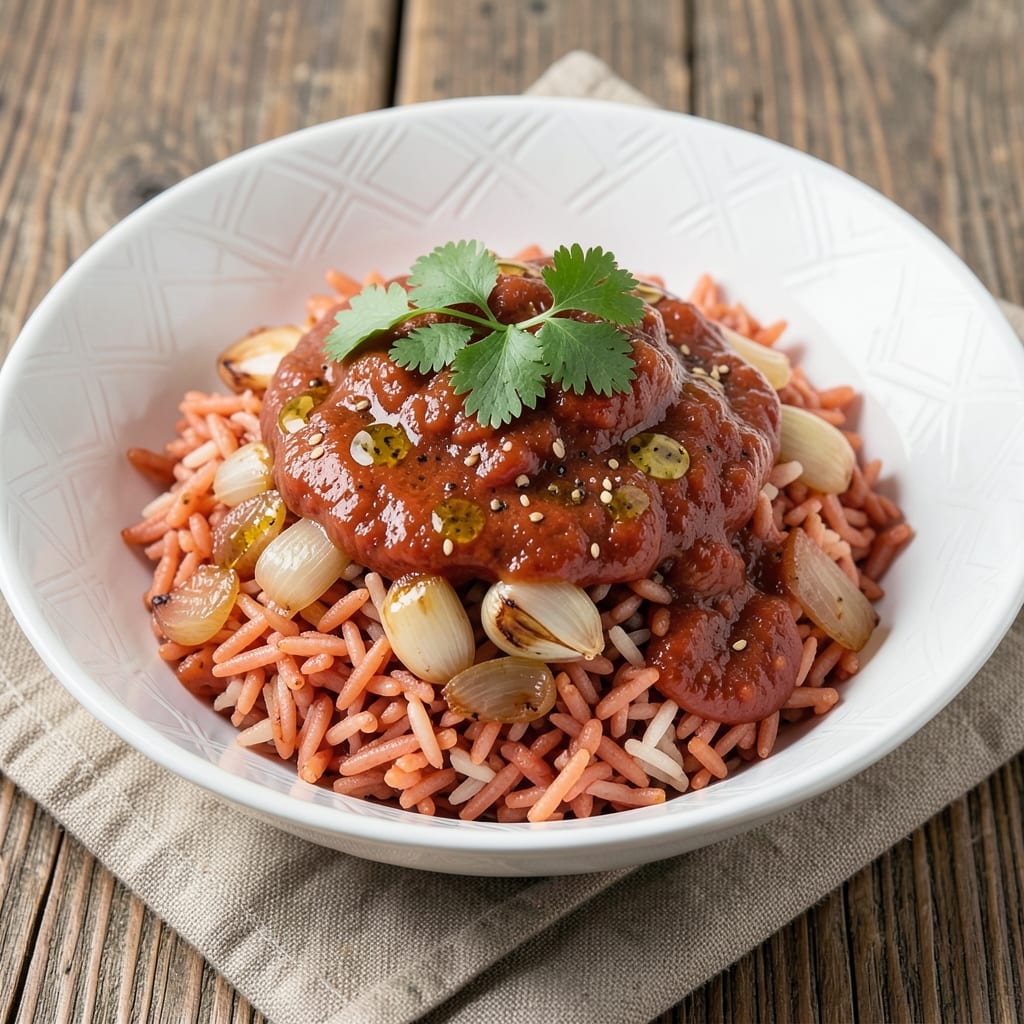
This African red rice recipe transforms humble grains into a tomato-tamarind spice bomb that carries the soul of West African kitchens. 🌟 The secret lies in toasting whole spices until they perfume the air—ginger, garlic, and thyme sizzle in oil until they release their magic, creating a fragrant base that builds flavor layer by layer. Unlike its plain white counterpart, this vibrant rice absorbs bold spices and tangy tomatoes, resulting in grains that are tender yet firm, with each bite bursting with complex, savory-sweet notes.
What sets this dish apart is its one-pot simplicity, where rice cooks in the same aromatic broth as the vegetables and spices, ensuring every grain is infused with flavor. The tamarind adds a bright, citrusy tang that cuts through the richness, while tomatoes deepen the sauce into a velvety consistency. This method isn’t just efficient—it’s traditional, preserving the essence of dishes like Senegalese thieboudienne or Ghanaian waakye, but adapted for home cooks.
The result is a restaurant-quality side dish that pairs beautifully with grilled meats, fried fish, or even as a standalone meal. The rice stays separate yet flavorful, with a slight stickiness that clings to the fork. Serve it alongside your favorite protein or use it as a base for a hearty bowl—this recipe delivers depth and satisfaction in every bite, proving that African cuisine doesn’t require complicated techniques, just patience and the right balance of spices.
Ready to elevate your weeknight dinners? This foolproof method ensures perfect rice every time, with minimal cleanup and maximum flavor. Let’s get cooking—your taste buds will thank you.
Ingredients for african red rice
These bold spices and tangy tamarind transform simple rice into a West African flavor explosion.
| Ingredient | Amount | Notes |
|---|---|---|
| Long-Grain White Rice 🍚 | 1 ½ cups | Uncooked, rinsed thoroughly |
| Diced Tomatoes 🍅 | 14 ½ oz | Canned, San Marzano preferred |
| Tamarind Paste 🍯 | ¼ cup | Or 1 tbsp tamarind concentrate |
| Onion 🧅 | 1 whole | Yellow, diced small |
| Fresh Garlic Cloves 🧄 | 4 cloves | Minced or finely chopped |
| Fresh Ginger 🌿 | 1 ½ tbsp | Grated finely (about 1 inch) |
| Fresh Thyme Leaves 🌿 | ½ tbsp | Or 1 tsp dried thyme |
| Vegetable Oil 🫒 | ¼ cup | For toasting spices |
| Ground Black Pepper 🌶️ | ½ tsp | Freshly cracked |
| Salt 🧂 | 1 ½ tsp | Diamond Crystal preferred |
| Bay Leaves 🍃 | 2 whole | Removed before serving |
| Scotch Bonnet Pepper 🌶️ | ½ whole | Seeds removed, chopped fine |
| Chicken or Vegetable Broth 💧 | 2 cups | Low-sodium preferred |
The tamarind is non-negotiable here—Trader Joe's or Latin markets have the best paste, but concentrate works too. Look for San Marzano tomatoes if you can find them; their sweetness balances the acidity. Fresh thyme and ginger? Whole spices at the grocery store's bulk section are cheaper and fresher. The Scotch bonnet is the heat carrier—reduce seeds for less spice. If you can't find it, jalapeño or habanero in a pinch, but taste first.
No tamarind paste? Lemon juice plus 1 tbsp brown sugar mimics the tang, though it won’t be identical. Fresh ginger too fibrous? Powdered ginger at half the amount works, but the texture changes. The broth can be homemade or store-bought—just skip the salt if using low-sodium. Diamond Crystal kosher salt dissolves better than table salt. For the rice, jasmine or basmati works too if you're out of long-grain, but it’ll be slightly stickier.
Toast your spices in oil for 2-3 minutes until fragrant—this unlocks the depth. The rice keeps 3-4 days in the fridge, but the flavor peaks after 1 day when the spices meld. Freeze portions for up to 3 months—just reheat with a splash of water. Double the batch; it disappears fast. Leftovers reheat beautifully, even better the next day.
Why You'll Love This Recipe
- One-Pot Magic: I swear by this recipe because it’s all in one pot—no fancy equipment, no extra bowls. Just rice, tomatoes simmering with tamarind, and that deep, smoky garlic aroma filling the kitchen. Honestly, the cleanup is almost as satisfying as the meal.
- Tamarind Tang Kick: That tamarind paste? It’s the secret weapon. It turns ordinary rice into something vibrant and tangy, cutting through the richness of the tomatoes and garlic. My kids still ask why we don’t eat this every week—it’s that good.
- Meal Prep MVP: Between us, this rice keeps perfectly for days. I make a big batch on Sundays, and it’s my go-to for lunches, potlucks, or even a quick side for grilled chicken. The flavors only get better as it sits—no sad, dry leftovers here.
- Budget Stretch: Long-grain rice, onions, and tomatoes? Check. Tamarind paste is cheap and lasts forever. I feed my family four hearty servings for under $5, and it still feels like a special dish. Practical and delicious—now that’s my kind of cooking.
Step-by-step instructions for African red rice
This vibrant one-pot dish comes together with bold flavors and minimal effort.
🍳 Step 1: Toast the Spices and Build the Base
Heat the 0.25 cup vegetable oil in a heavy-bottomed pot over medium heat. Add the 1 whole onion (diced small) and cook for 5-6 minutes until soft and translucent. Here's the thing—don't rush this step. You want the onion to really break down and release its sweetness.
Add the 4 cloves fresh garlic cloves (minced), 1.5 tbsp fresh ginger (grated), and 0.5 whole scotch bonnet pepper (seeds removed, chopped fine). Cook for 1-2 minutes until fragrant—you'll smell that bright, citrusy kick from the scotch bonnet. Stir in the 0.5 tbsp fresh thyme leaves and 2 whole bay leaves, letting them toast for 30 seconds until aromatic.
🍳 Step 2: Develop the Tomato-Tamarind Sauce
Pour in the 14.5 oz diced tomatoes and stir to combine with the spices. Let it simmer for 5 minutes until the tomatoes break down and the mixture thickens slightly. I know it seems like nothing's happening, but trust me—this is where the magic starts.
Add the 0.25 cup tamarind paste and stir well to dissolve. The tamarind gives this dish its signature tangy depth. Simmer for another 3-4 minutes until the sauce reduces by about half and becomes glossy. Season with the 1.5 tsp salt and 0.5 tsp ground black pepper, tasting as you go. You want the flavors to be vibrant but balanced—this is your chance to adjust before adding the rice.
🥘 Step 3: Cook the Rice to Perfect Texture
Add the 1.5 cups long-grain white rice (rinsed thoroughly) and stir to coat evenly in the tomato-tamarind mixture. The rice should absorb the flavors immediately. Pour in the 2 cups chicken or vegetable broth, making sure each grain gets plenty of liquid.
Bring to a gentle boil, then reduce heat to low and cover tightly with a lid. Here's the crucial part: don't peek or stir for 20 minutes. You want the rice to steam undisturbed so it absorbs the broth evenly and develops that signature red hue from the spices. After 20 minutes, check for doneness—you'll know it's ready when the rice is tender but still has a slight bite, and the liquid has mostly been absorbed.
⏰ Step 4: Rest and Fluff to Perfection
Remove from heat and let the rice sit covered for 5 minutes. This resting time allows the steam to finish cooking the rice and redistribute the flavors. Here's a pro tip: I like to fluff the rice with a fork right in the pot—this helps separate the grains and gives you that restaurant-quality presentation.
Remove and discard the 2 whole bay leaves before serving. The rice should be tender with a slight chew, infused with the bright tomato-tamarind sauce, and those spices should be popping in every bite. Serve immediately with grilled meats or as a standalone dish—it's that good.
Pro Tips For Making African Red Rice
- TOAST THE RICE FIRST: I learned this the hard way—skipping the toast means bland, mushy rice. Heat your dry rice in a pan over medium-high for 2-3 minutes until it smells nutty and lightly golden. This step locks in flavor and prevents the rice from turning into glue later.
- SIMMER TOMATOES LOW: Diced tomatoes release water fast, turning your sauce into soup. After adding them, drop the heat to low and let them cook uncovered for 10 minutes. This reduces excess liquid without burning the tamarind or garlic.
- DILUTE TAMARIND PASTE: Tamarind paste is thick and sticky—just slapping it in makes the sauce clump. Mix it with ½ cup warm water first, then whisk it into the pot. This ensures even distribution and prevents bitter pockets of undissolved paste.
- USE HALF THE ONION: I was skeptical until I tried it: finely chop only half the onion (about ½ cup) and reserve the rest. The raw onion adds freshness at the end—toss in the chopped pieces with the garlic right before serving. It brightens the dish without overpowering the tamarind’s tang.
Troubleshooting this dish
Mushy Rice Fix
If your rice turns out mushy, it’s usually from too much liquid or insufficient resting time. Always use a heavy-bottomed pot to distribute heat evenly, and never exceed the 2 cups broth for 1.5 cups rice ratio. After cooking, let the rice rest covered for 10 minutes—this crucial step allows excess moisture to evaporate. If it’s still too soft, spread it on a baking sheet and bake at 350°F for 5-10 minutes to dry it out. 🌡️
Underseasoned Flavor
The tamarind-tomato sauce should be the star, but sometimes it tastes flat. If your rice lacks depth, taste the sauce before adding rice—it should be tangy, slightly sweet, and well-balanced. Boost flavor by adding 1 extra tbsp tamarind paste or ½ tsp smoked paprika during the simmer. For extra umami, stir in 1 tsp soy sauce or ½ tsp fish sauce at the end. Trust your taste buds: African cuisine thrives on bold flavors, so don’t shy away from adjusting! 🌶️
Uneven Cooking
Unevenly cooked rice often means inconsistent heat distribution. Use a pot with a tight-fitting lid and avoid lifting it during cooking—every peek releases steam and disrupts the cooking process. If your rice is still firm in spots, add 2 tbsp hot broth and cover for another 5 minutes. For future attempts, try a rice cooker on the "white rice" setting, or use a slow cooker on low for 30 minutes after adding rice and broth. 💡
Burnt Spices
If your spices burn before releasing their aroma, you’re cooking them too hot. Toast spices over medium heat—they should sizzle gently, not smoke aggressively. Remove the pot from heat if it starts to darken too quickly. For extra insurance, add spices in stages: start with onions, then garlic and ginger, and finally the Scotch bonnet and thyme. This gradual approach prevents scorching while building layers of flavor. 🔥
Sauce Too Thin
A watery sauce can ruin the texture of your red rice. If the sauce doesn’t reduce enough, simmer it uncovered for 2-3 extra minutes before adding rice. For a thicker consistency, mash 1-2 tomatoes with a fork to release more liquid, then simmer until it thickens. If the rice still feels soggy, drain any excess liquid through a fine-mesh strainer before serving. 💧
Grain Discoloration
The signature red hue comes from the spices, but if your rice turns an unnatural shade, it’s likely overcooked or exposed to too much acid (like tamarind). To prevent this, rinse the rice thoroughly before cooking to remove excess starch. If the color is off, stir in 1 tbsp olive oil at the end to mellow the intensity. For a more authentic look, use jasmine rice—it absorbs spices beautifully while maintaining its shape. 🌈
Nutrition facts
Frequently asked questions
What makes this African red rice different from regular rice dishes?
The vibrant red color and complex flavor come from toasting whole spices (ginger, garlic, thyme) in oil until fragrant, then simmering with tomatoes and tamarind. This creates a tangy, slightly sweet sauce that coats each grain perfectly. Unlike plain rice, this version absorbs bold West African spices while staying separate and flavorful.
Can I substitute tamarind paste if I can't find it?
Yes! Mix 1 tbsp lemon juice with 1 tbsp brown sugar for a similar tangy-sweet balance. For extra depth, add ½ tsp ground coriander to mimic tamarind's complexity. The flavor won't be identical, but it'll still create a delicious tomato-based sauce.
How do I adjust this recipe for a rice cooker?
Use the same ingredients but add rice and broth together, then select the "white rice" setting. For even better results, toast your spices in a separate pan first, then transfer to the rice cooker. The cooker's even heat distribution prevents burning while ensuring perfect texture.
What proteins pair best with this red rice?
This dish shines with grilled meats like chicken, beef, or fish. For vegetarian options, try black-eyed peas, chickpeas, or plant-based proteins. The tangy tomato-tamarind sauce complements smoky, spicy, or citrusy flavors beautifully. Serve with a side of collard greens for a complete West African meal.
Why does my rice turn out mushy?
Mushy rice usually means too much liquid or insufficient resting time. Always use a heavy-bottomed pot and never exceed the 2 cups broth for 1.5 cups rice ratio. After cooking, let it rest covered for 10 minutes before fluffing. If still too soft, spread on a baking sheet and bake at 350°F for 5-10 minutes.