
Main Courses
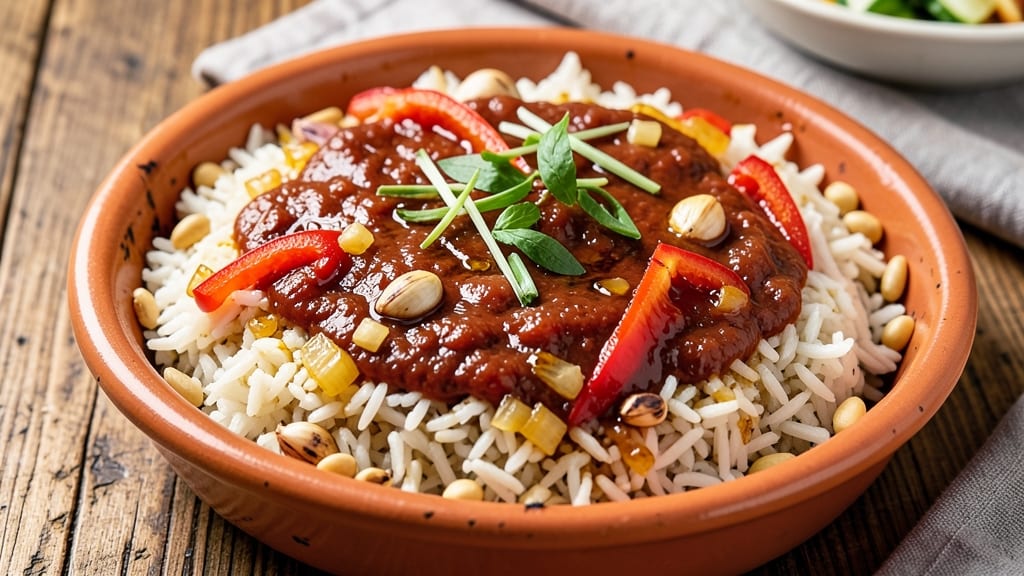
This Cameroonian jollof rice recipe delivers restaurant-quality flavor in a single pot, where smoky spices and rich tomato sauce transform long-grain rice into a vibrant, aromatic centerpiece. The secret lies in toasting whole spices—cumin, thyme, and bay leaves—until they perfume the air, then building layers of flavor through slow simmering.
Unlike its Nigerian cousin, this version often incorporates palm oil or crayfish for depth, creating that signature deep red hue and complex, slightly sweet-savory profile.
What sets this dish apart is its one-pot simplicity—no separate sauces or side dishes needed. The rice absorbs the tomato-pepper base as it cooks, resulting in grains that are tender yet distinct, each bite bursting with caramelized tomato and earthy spices.
Traditionally served with fried plantains or grilled chicken, this jollof rice stands alone as a meal, making it perfect for weeknight dinners or gatherings where bold flavors take center stage.
Ingredients for cameroonian jollof rice
Sixteen ingredients transform into one aromatic, spice-infused pot of Cameroonian jollof rice.
| Ingredient | Amount | Notes |
|---|---|---|
| Long-Grain White Rice 🍚 | 2 cups | Uncooked, rinsed thoroughly |
| Canned Tomato Paste 🍅 | ½ cup | San Marzano preferred, no sugar added |
| Red Bell Peppers 🌶️ | 2 whole | Seeded and finely diced |
| Yellow Onion 🧅 | 1 whole | Medium, finely chopped |
| Garlic Cloves 🧄 | 6 cloves | Minced, fresh preferred |
| Palm Oil 🫒 | ¼ cup | Red palm oil for authentic color |
| Ground Cumin 🌿 | 2 tsp | Toasted for deeper aroma |
| Dried Thyme 🍃 | 1 tsp | Or 1 tbsp fresh thyme leaves |
| Bay Leaves 🌿 | 2 whole | Crushed slightly before adding |
| Dried Red Pepper Flakes 🌶️ | 1 tsp | Adjust for heat preference |
| Ground Black Pepper 🌶️ | 1 tsp | Freshly cracked preferred |
| Salt 🧂 | 1 ½ tsp | Diamond Crystal preferred |
| Chicken or Vegetable Stock 💧 | 2 cups | Low-sodium preferred |
| Crayfish (optional) 🦐 | ½ cup | Dried, ground for authentic depth |
| Fresh Cilantro 🌿 | ¼ cup | Chopped, for garnish |
The foundation of this dish begins with San Marzano tomato paste—its sweetness and depth are unmatched. Trader Joe's or specialty Italian markets carry the best cans, but any high-quality paste will work. Palm oil is non-negotiable for that signature red hue and rich flavor; African markets or international grocery stores stock it, or order online. For the spices, toast whole cumin seeds in a dry pan until fragrant before grinding—this elevates the dish dramatically. Bay leaves should be lightly crushed before adding to release their oils. If you can't find red palm oil, substitute with a mix of olive oil and a pinch of paprika for color, though the flavor won't be identical.
No palm oil? Olive oil plus a splash of balsamic vinegar mimics the depth, though the color will differ. Crayfish is traditional but optional—dried shrimp or a pinch of smoked paprika adds a similar umami punch. For the peppers, roast them whole over an open flame before dicing to intensify their sweetness. Stock matters here: homemade chicken or vegetable stock gives the best results, but a quality low-sodium store-bought version works in a pinch. The rice should be rinsed until the water runs clear to prevent mushiness. And if you're short on time, pre-chop all vegetables while the spices toast—multitasking saves minutes without sacrificing flavor.
This dish tastes even better the next day as flavors meld. Store leftovers in an airtight container in the fridge for up to 5 days, or freeze for 3 months in portions. The rice reheats beautifully—just add a splash of water or stock to prevent drying. For serving, garnish with fresh cilantro and extra red pepper flakes right before eating. If making ahead for a gathering, prepare the sauce base first, then add the rice and reheat together—this keeps the grains separate and fluffy. The one-pot method means easy cleanup, but soak the pot in warm water for stubborn bits.
Why You'll Love This Recipe
- One-Pot Magic: I swear by this recipe when I’m too tired to scrub pots—just rice, tomatoes, and peppers all simmering together in one. The garlic and onions caramelize right into the sauce, so you end up with that rich, smoky depth without extra steps.
- Tomato-Pepper Perfection: That canned tomato paste and fresh bell peppers? They’re the secret weapons. The paste thickens into a glossy, slightly sweet sauce, while the peppers add a bright, smoky kick that balances the rice’s creaminess. Honestly, the first time I tasted it, I thought, “Why haven’t I done this sooner?”
- Meal Prep MVP: Between us, this is my go-to for busy weeks. Cook a big batch on Sunday, and you’ve got lunch or dinner covered for days—it reheats like a dream and tastes just as good cold. My kids even ask for it in their lunches, which is basically the gold standard.
- Budget-Friendly Feast: Long-grain rice and canned tomatoes keep costs low, but the flavor? Ridiculously good. I’ve served this at potlucks, family gatherings, and lazy weeknights, and no one ever guesses it’s not some fancy restaurant dish. Plus, leftovers? They’re the best kind—better the next day.
Step-by-step instructions for Cameroonian jollof rice
Master this one-pot technique for restaurant-quality flavor with minimal cleanup.
Sauté Aromatics in Palm Oil
Heat the 0.25 cup palm oil in a heavy-bottomed pot over medium heat until it shimmers but doesn't smoke. Add the finely chopped yellow onion and cook for 3-4 minutes until translucent and just beginning to caramelize at the edges. This foundational step develops the dish's rich, nutty base.
Add the minced garlic cloves and cook for 30 seconds until fragrant—don't let it brown or it'll turn bitter. Stir in the ground cumin and dried thyme, toasting for 1 minute until the spices release their aromatic oils. This is where the authentic Cameroonian depth begins to build.
Build the Tomato Base
Increase heat to medium-high and add the diced red bell peppers and 0.5 cup tomato paste. Stir vigorously for 5 minutes until the mixture darkens and thickens into a rich, jammy consistency. This reduction concentrates the flavors and creates the signature deep red color of Cameroonian jollof.
Add the crushed bay leaves, dried red pepper flakes, ground black pepper, and 1.5 tsp salt. Cook for another 2 minutes until the spices meld completely. This is the critical flavor foundation—don't rush this step. The sauce should coat the back of a spoon with a velvety texture.
Add Liquid and Rice
Pour in the 2 cups chicken or vegetable stock and stir to combine with the tomato mixture. Bring to a gentle boil, then reduce heat to low and add the 2 cups rinsed long-grain white rice. Stir once to distribute evenly, then let cook undisturbed for 10 minutes to absorb the initial liquid.
After 10 minutes, stir gently to prevent sticking. If using the 0.5 cup crayfish, sprinkle it over the rice now. The crayfish adds a distinctive umami depth that's characteristic of West African jollof variations. Cover the pot and simmer for 15 minutes on low heat.
Steam to Perfect Texture
After the initial 15 minutes, uncover the pot and increase heat to medium-low for 5 minutes to evaporate any excess surface moisture. This creates the signature slightly crispy top layer while keeping the interior tender. The rice should be nearly tender but still have a slight bite in the center.
Return to low heat, cover tightly, and steam for another 10 minutes. The rice should be fully tender with a slight resistance when pressed with a fork—this indicates perfect doneness. Avoid lifting the lid during this time to maintain even cooking and prevent drying.
Rest and Garnish
Remove from heat and let the jollof rice rest covered for 10 minutes. This resting period allows the flavors to meld completely and the rice to finish absorbing any remaining liquid. Fluff gently with a fork, then garnish with the 0.25 cup chopped fresh cilantro just before serving.
The finished jollof should have a vibrant red color, tender yet distinct rice grains, and a complex flavor profile where the tomato, spices, and crayfish (if used) harmonize perfectly. Serve immediately with grilled chicken, fried plantains, or a simple green salad for a complete meal.
Pro Tips For Making Cameroonian Jollof Rice
- STIR CONSTANTLY FIRST 15 MINUTES: I learned this the hard way—skipping the stir after adding tomato paste and bell peppers means burning the bottom while the top stays raw. Keep that heat medium-high and stir every 30 seconds until the oil releases from the onions and garlic. (Yes, it’s annoying, but your future self will notice the difference.)
- USE HALF THE RICE YOU THINK: Cameroonian jollof rice is about the sauce, not the grains. Measure your rice after rinsing, then halve it—you’ll end up with perfect, fluffy bites swimming in flavor, not a dry, clumpy mess. (Trust me, I’ve cried over mushy rice.)
- SALT THE TOMATO PASTE: This isn’t just about seasoning—it’s about cutting through the acidity. Sprinkle ½ teaspoon of salt directly into the tomato paste before mixing it with the onions. It balances the dish from the start and saves you from over-salting later. (Your taste buds will thank you.)
- LAYER THE ONIONS AND GARLIC: Don’t just chop and dump. Sauté the onions until they’re translucent and slightly caramelized, then push them to the sides of the pot. Add the garlic cloves whole and fry them for 30 seconds until fragrant—this builds depth. After 1 minute, crush them lightly with the back of a spoon. (It’s a small step, but it makes the sauce sing.)
Flavor customization for cameroonian jollof rice
Spice Level Control
Adjust the dried red pepper flakes to suit your heat preference—start with ½ tsp for mild, 1 tsp for medium, or 1.5 tsp for bold heat. For extra depth, add ½ tsp smoked paprika alongside the red pepper flakes.
Fresh scotch bonnet or habanero peppers (seeded and minced) can be swapped in for intense heat, but use sparingly—¼ tsp of minced fresh pepper equals about ½ tsp dried flakes. 🌶️
Sweet-Tangy Balance
Boost the natural sweetness by adding 2 tbsp honey or brown sugar when building the tomato base—this mimics the caramelization from slow cooking. For tanginess, stir in 1 tbsp tomato paste mixed with 1 tsp apple cider vinegar at the end.
A splash of orange juice (¼ cup) brightens the dish while balancing the richness of the palm oil.
Umami Depth Boosters
For that signature West African umami, toast 1 tbsp soy sauce or ½ cup ground crayfish in the palm oil before adding onions. If crayfish isn’t available, 1 tsp fish sauce or 1 tbsp Worcestershire sauce delivers a similar savory punch.
For a vegetarian option, 1 tbsp miso paste adds depth without animal products.
Herb Variations
Swap thyme for 1 tbsp fresh curry leaves (toasted briefly) for a distinct South Indian-Cameroonian fusion. 1 tsp ground ginger or 1-inch fresh ginger (grated) adds warmth, while 1 tbsp chopped fresh parsley brightens the dish at the end.
For a smoky note, ½ tsp liquid smoke (added with the stock) works in a pinch, though fresh wood-smoked ingredients are ideal.
Protein Infusions
Cook ½ lb chicken thighs or beef stew meat directly in the pot with the rice for a one-pot meal. For seafood lovers, add 1 cup shrimp or smoked fish in the last 10 minutes of cooking.
Vegetarians can stir in 1 can chickpeas (drained) for protein and texture. Always add proteins after the rice has absorbed most of the liquid to prevent overcooking.
Texture Contrast
Add ½ cup roasted peanuts or cashews for crunch, either toasted in the palm oil with the onions or sprinkled on top before serving. Crispy fried plantains (½ cup, diced) mixed into the final rice add sweetness and texture.
For a creamy element, stir in ¼ cup coconut milk at the end for a richer finish.
Nutrition facts
Frequently asked questions
Why does Cameroonian jollof rice have a deeper red color than Nigerian versions?
The vibrant red hue comes from palm oil and a longer reduction of the tomato base. Cameroonian recipes often use red palm oil (not the yellow variety) and toast spices like crayfish or smoked paprika to intensify the color. The sauce simmers longer, creating a jammy consistency that coats the rice beautifully.
Can I substitute palm oil if I can't find it?
Yes! Mix 3 tbsp olive oil with 1 tsp paprika for color, though the flavor won't be identical. For best results, use ½ cup vegetable oil plus 1 tbsp tomato paste> to mimic the richness. The dish will still taste delicious, just with a slightly different profile.
How do I prevent the rice from turning mushy?
Rinse the rice until the water runs clear to remove excess starch, then let it soak for 15 minutes before cooking. Use a heavy-bottomed pot and stir only once after adding the rice. Avoid lifting the lid during the 15-minute simmer>—steam is key for fluffy texture!
What's the best way to reheat leftovers?
Sprinkle 1-2 tbsp water or stock over the rice and cover tightly for 5 minutes> on low heat. This prevents drying. For microwave reheating, cover with a damp paper towel and heat in 30-second intervals, stirring between each. The rice should stay tender and separate.
Can I make this recipe vegetarian?
Skip the meat and add 1 can chickpeas (drained) or ½ cup mushrooms> for texture. Boost umami with 1 tbsp soy sauce> or 1 tsp miso paste> toasted in the palm oil. For protein, include tofu or tempeh> cooked separately and added at the end.