
Main Courses
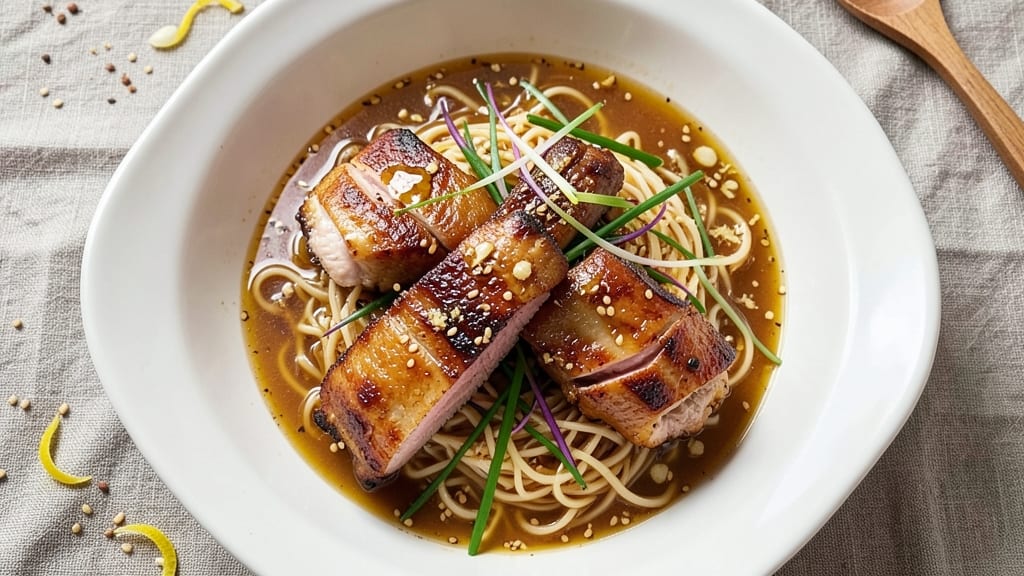
This chicken ramen rice noodle recipe delivers the perfect balance of rich, savory broth, tender braised chicken, and slippery noodles that cling to every spoonful. The secret lies in building flavor through a slow-simmered broth infused with aromatics, garlic, and ginger—creating depth that transforms simple ingredients into something restaurant-worthy.
What makes this recipe stand out is the technique of braising the chicken directly in the broth, which infuses it with layers of umami without overpowering its natural taste.
The foundation of great ramen starts with the broth, which simmers for at least 2 hours to develop a silky, aromatic base. While it cooks, the chicken thigh pieces become fork-tender, absorbing the flavors of the broth while staying juicy.
Rice noodles, with their delicate texture, cook in just 3 minutes—quick enough to avoid turning mushy, yet long enough to soak up the rich liquid.
The result is a bowl where every component works in harmony: the broth coats the noodles, the chicken melts in your mouth, and the garnishes add freshness and crunch.
What you’ll end up with is a bowl of ramen that’s both comforting and sophisticated—silky broth, tender chicken, and slippery noodles all coming together in a single, satisfying bite.
The beauty of this recipe is its versatility: you can customize it with miso for a funky depth, tonkotsu for a creamy richness, or a dash of chili oil for heat. It’s the kind of dish that feels indulgent yet simple enough to make on a weeknight.
Whether you’re serving this for a cozy dinner or a gathering with friends, the aroma alone will draw everyone to the table. The key is letting the broth work its magic—patience in simmering pays off in flavor.
Ready to make a bowl that feels like a hug in a dish? Let’s get started.
Ingredients for chicken ramen rice noodle
Rich broth, tender chicken, and slippery noodles—just 15 ingredients for restaurant-quality ramen at home.
| Ingredient | Amount | Notes |
|---|---|---|
| Chicken Thighs 🍗 | 1 ½ lb | Bone-in, skin-on preferred |
| Rice Noodles 🍜 | 8 oz | Fresh or dried, 3-inch width |
| Chicken Broth 💧 | 6 cups | Low-sodium preferred |
| Garlic Cloves 🧄 | 6 cloves | Minced for infusion |
| Fresh Ginger 🌿 | 2 tbsp | Grated, peeled |
| Sesame Oil 🫒 | 1 tbsp | Toasted for aroma |
| Soy Sauce 🥄 | ½ cup | Dark or light preferred |
| Miso Paste 🧀 | 2 tbsp | White or red miso |
| Onion 🧅 | 1 whole | Yellow, sliced thin |
| Green Onions 🧅 | ¼ cup | Sliced for garnish |
| Eggs 🥚 | 2 whole | Soft-boiled for garnish |
| Sesame Seeds 🌾 | 1 tbsp | Toasted for crunch |
| Chili Oil 🌶️ | 1 tbsp | Optional for heat |
| Salt 🧂 | 1 ½ tsp | Adjust to taste |
| Black Pepper 🌶️ | ½ tsp | Freshly ground |
The chicken thighs are non-negotiable here. Bone-in, skin-on gives you the most flavor and texture—Costco or Whole Foods carry the best quality in bulk. Look for thighs with good marbling, not too pale. If you can't find bone-in, skin-on, boneless thighs work too, but the broth won't be quite as rich. The broth is the heart of this dish, so don't skimp on quality. Homemade chicken broth is ideal, but Kitchen Basics or Pacific Foods low-sodium options work well in a pinch. The miso paste should be white for mild flavor or red for deeper umami—just make sure it's organic if possible.
No sesame oil? Toasted peanut oil gives similar depth, though with a different nutty profile. Running short on miso? Substitute with an extra tablespoon of soy sauce plus a teaspoon of sugar—it won't be identical, but it'll get you close. Fresh ginger loses potency fast, so freeze what you won't use within a week. The rice noodles? Fresh is ideal, but dried works too—just soak them in warm water for 5 minutes before cooking. For the garnishes, soft-boiled eggs are a must, but if you're in a rush, marinated hard-boiled eggs (sliced) work wonderfully.
Broth keeps for 5 days in the fridge—make extra for leftovers. The noodles cook in minutes, but add them to the broth just before serving so they don't turn mushy. Store garnishes separately: soft-boiled eggs keep 2 days in the fridge, green onions last a week wrapped in damp paper towels. This dish reheats beautifully—simmer gently on the stove with a splash of water to restore silkiness. Portion into bowls with broth first, then add noodles and garnishes to keep everything hot.
Why You'll Love This Recipe
- One-Pot Magic: I swear by this—just toss everything in one pot, simmer, and boom. No fancy gadgets, no extra bowls, no stress. The broth soaks into the noodles while the chicken cooks, and honestly? I’ve made it while scrolling through my phone. That’s how effortless it is.
- Umami Bomb: Between the garlic and ginger sizzling in the broth and those juicy chicken thighs falling apart, every bite is ridiculously satisfying. The rice noodles soak up all that rich flavor—no dry, sad noodles here. It’s the kind of dish where the first spoonful makes you go, “Wait, I’m already hungry again?”
- Lunchbox Hero: Between us, this is my go-to for meal prep. The broth stays warm for days (yes, really), and the noodles don’t get mushy if you pack it right. Toss in a soft-boiled egg or some greens, and you’ve got a lunch that’ll have coworkers asking for seconds. My daughter even brings it to school—no joke.
- Thrifty Comfort: Chicken thighs are cheaper than breasts, broth is cheaper than takeout, and ginger lasts forever. I’ve made this for under $10 and fed four people—with leftovers for dinner the next night. It’s the kind of recipe that makes grocery day less painful, and honestly? That’s a win in my book.
Step-by-step instructions for chicken ramen rice noodle
Here's how to transform simple ingredients into a restaurant-quality ramen with tender chicken and silky noodles.
Prepare the Chicken and Aromatics
Pat the 1.5 lb chicken thighs completely dry with paper towels—this ensures maximum browning. Season generously with 1.5 tsp salt and 0.5 tsp black pepper, then set aside. In a small bowl, combine the 6 cloves minced garlic, 2 tbsp grated fresh ginger, and 2 tbsp miso paste. This aromatic blend will infuse the broth with deep umami flavor.
Slice the 1 whole onion into thin half-moons and set aside. For the noodles, if using dried 8 oz rice noodles, soak them in warm water for 10-15 minutes until pliable but still firm. Drain and rinse briefly to stop cooking—this prevents mushiness when assembled. Keep them covered with a damp towel until ready to use.
Sear the Chicken and Build the Broth
Heat a large pot or Dutch oven over medium-high heat and add 1 tbsp sesame oil. Once shimmering, add the chicken thighs skin-side down and sear for 5-6 minutes until golden brown and crispy. Flip and sear the other side for 3-4 minutes, then remove and set aside. The skin should be deeply browned—this creates the rich foundation for your broth.
In the same pot, add the sliced onion and cook for 3 minutes until softened. Pour in the 6 cups chicken broth and bring to a gentle simmer. Add the garlic-ginger-miso mixture and stir until fully dissolved. Return the chicken to the pot, skin-side up, and simmer uncovered for 20-25 minutes until the chicken is fork-tender and the broth has reduced slightly, intensifying its flavor.
Finish the Broth and Prepare Garnishes
Remove the chicken from the broth and let it rest on a cutting board for 5 minutes. Strain the broth through a fine-mesh sieve into a clean pot, pressing gently on the solids to extract maximum flavor. Skim off any excess fat if desired, then return the broth to medium-low heat. Stir in the 0.5 cup soy sauce and simmer for 5 minutes to meld the flavors.
While the broth simmers, prepare the garnishes. Soft-boil the 2 whole eggs by simmering them in a pot of water for 6 minutes, then transfer to an ice bath for 2 minutes to stop cooking. Peel and halve lengthwise. Toast the 1 tbsp sesame seeds in a dry skillet over medium heat for 1-2 minutes until golden and fragrant. Slice the 0.25 cup green onions into 1-inch pieces.
Assemble and Serve
Shred the rested chicken into bite-sized pieces, discarding any large bones. Divide the 8 oz rice noodles among four deep bowls. Ladle the hot broth over the noodles until just covered—about 1.5 cups per bowl. Add the shredded chicken, then top with a soft-boiled egg half, a drizzle of 1 tbsp chili oil, and a sprinkle of toasted sesame seeds and green onions.
Serve immediately with chopsticks, encouraging diners to mix everything together. The contrast of silky noodles, tender chicken, and rich broth creates the perfect balance. For extra depth, offer additional chili oil or a splash of soy sauce on the side. Each bowl should deliver a harmonious blend of textures and flavors—creamy broth, chewy noodles, and succulent chicken.
Pro Tips For Making Chicken Ramen Rice Noodle
- CRISP THE GINGER: Use a microplane or very sharp knife to zest the ginger—about 1 teaspoon of zest plus 1 tablespoon of finely minced pieces. The zest adds a bright, aromatic punch that cuts through the richness of the chicken thighs, while the minced bits melt into the broth for depth. (Yes, it sounds like overkill, but trust me, it makes the difference between "good" and "wow.")
- SEAR THIGHS SKIN-SIDE DOWN: Lay the chicken thighs skin-side down in a cold pan, then turn the heat to medium-low. Let them render fat slowly for 8–10 minutes before flipping—this guarantees a crispy, golden skin without burning. Rushing this step turns your ramen into greasy, sad chicken. (I learned this the hard way after throwing out three batches.)
- SALT THE BROTH LATE: Hold off on adding salt to the chicken broth until the very end, even if it’s store-bought. The noodles and chicken will release enough starch and moisture to mellow the flavor—adding salt early makes the broth taste flat by the time everything’s done. Taste and adjust only after the noodles are cooked.
- COOK NOODLES IN BROTH: Dump the raw rice noodles directly into the simmering broth (with chicken and aromatics) instead of pre-boiling them. They’ll absorb the flavors instantly and cook through in 3–4 minutes—no mushy texture, no clumping. (This is the shortcut that actually saves time, not the other way around.)
Wine and beer pairings for this chicken ramen rice noodle
Light and Crispy Whites
For a refreshing contrast, pair your chicken ramen with a dry Riesling from Germany or Austria. The acidity cuts through the richness of the broth while its citrus notes complement the umami flavors.
Look for a Keller Riesling Kabinett—it’s crisp, slightly floral, and won’t overpower the dish. Serve it chilled at 45-50°F to highlight its bright, clean finish. 🍷
Rich and Creamy Options
If you prefer a bolder match, a Japanese sake like Dassai Junmai Daiginjo adds a smooth, slightly sweet depth that harmonizes with the miso and soy sauce. The clean, fermented profile enhances the broth’s complexity without clashing.
Alternatively, a Chardonnay with minimal oak—like a California La Crema—brings buttery notes that mirror the richness of the chicken. Keep the temperature at 50-55°F for optimal balance.
Beer Pairings
A light lager like Asahi Super Dry or Sapporo cleanses the palate between bites, its subtle hop bitterness balancing the dish’s saltiness. For a craft option, try a Belgian Witbier such as Hoegaarden—the corianander and orange peel notes add a refreshing twist.
Avoid heavy stouts or IPAs, which could overpower the delicate broth. Serve beers at 40-45°F for the best experience. 🍺
Spicy Variations
If you added chili oil or extra heat, opt for a cooling Riesling or a dry sake to counteract the spice. A German Spätlese Riesling with its honeyed sweetness and zesty acidity provides a soothing contrast.
For beer lovers, a wheat beer like Blue Moon—with its citrusy notes—works beautifully. Always serve these pairings slightly chilled to enhance their refreshing qualities.
Warm Weather Adaptations
On hot days, swap wine for a sparkling rosé like Whispering Angel—its fruity, effervescent profile makes it a lively companion. For beer, a Mexican Lager such as Modelo Especial offers a crisp, easy-drinking option.
Both choices keep the meal feeling light and refreshing while still complementing the dish’s flavors. 💫
Nutrition facts
Frequently asked questions
Can I use dried rice noodles instead of fresh?
Dried rice noodles work perfectly—just soak them in warm water for 10-15 minutes until pliable but still firm. Drain and rinse briefly to stop cooking, then keep covered with a damp towel until ready to use. Fresh noodles cook in just 3 minutes, while dried take slightly longer to soften. The texture difference is minimal when assembled properly.
How do I make the broth richer without extra fat?
For a deeper flavor without excess fat, use bone-in, skin-on chicken thighs—the skin crisps beautifully and infuses the broth with richness. After simmering, strain the broth and skim off any visible fat. Add 1 tbsp toasted sesame oil at the end for aroma, or stir in 1 tsp fish sauce for umami depth. Simmering longer (2+ hours) also concentrates the flavors naturally.
Can I prepare this ramen ahead of time?
Yes! Make the broth up to 5 days ahead and store it in the fridge. Keep the chicken and garnishes separate. When ready to serve, reheat the broth gently, add fresh noodles, and assemble with prepped toppings. For best texture, avoid cooking noodles in advance—they absorb broth better when added fresh. Garnishes like soft-boiled eggs and green onions can be prepped a day ahead and stored separately.
What's the best way to adjust the spice level?
Start with the base recipe, then customize: Add 1 tbsp chili oil for mild heat, or 1 tsp gochujang (Korean chili paste)> for smoky depth. For extra spice, stir in ½ tsp red pepper flakes> directly into the broth while simmering. Balance with a splash of rice vinegar> if needed—it brightens flavors without overpowering. Always taste as you go!
Why did my noodles turn mushy?
Mushy noodles usually happen from overcooking or adding them too early. Rice noodles cook in 3 minutes>—set a timer! For dried noodles, soak them just until pliable (10-15 minutes>) and rinse briefly to stop cooking. Always add noodles to the hot broth right before serving> so they absorb liquid without losing structure. If using leftovers, reheat broth separately and add noodles fresh.