
Side Dishes
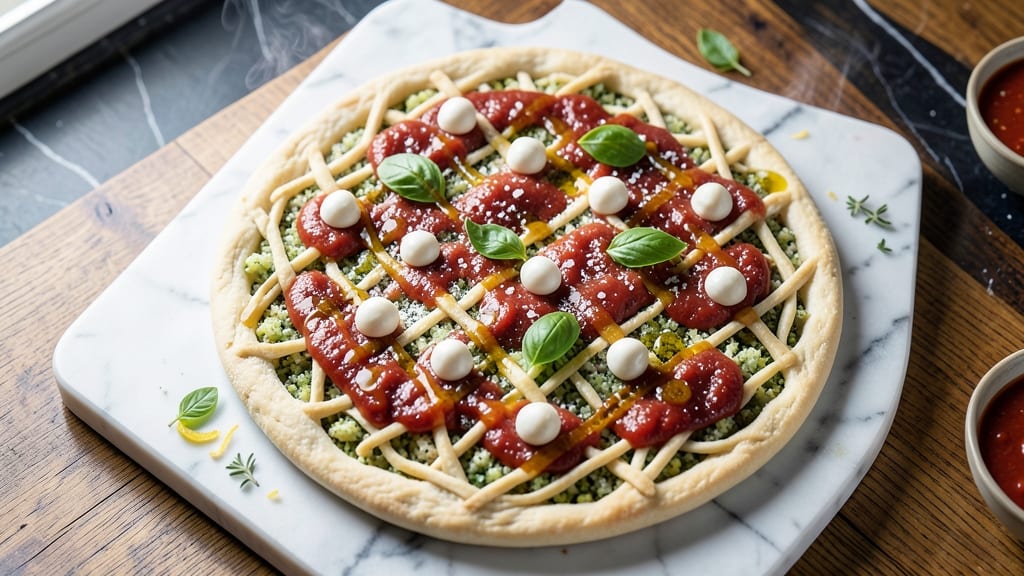
This cauliflower rice pizza dough delivers the perfect balance of crispy edges and chewy centers without traditional flour. 🔥 The secret lies in blending riced cauliflower with almond flour and xanthan gum—a vegan-friendly combination that mimics classic dough while keeping carbs low.
I developed this recipe after struggling to find a low-carb pizza crust that held toppings without crumbling, and this version finally cracked the code.
The result is a sturdy, flavorful base that bakes up golden and crispy along the edges while maintaining a tender, chewy interior. Unlike store-bought low-carb crusts, this dough absorbs sauces beautifully and supports even heavy toppings without falling apart.
Whether you're following a vegan diet, cutting carbs, or simply craving a lighter pizza option, this recipe transforms a simple vegetable into a satisfying, restaurant-quality crust.
Ingredients for cauliflower rice pizza dough
Transform simple cauliflower into a sturdy, low-carb pizza crust with these carefully balanced ingredients.
| Ingredient | Amount | Notes |
|---|---|---|
| Fresh Cauliflower 🥬 | 1 ½ lb | Riced, excess moisture squeezed out |
| Almond Flour 🌰 | 1 ½ cups | Blanched, fine grind preferred |
| Xanthan Gum 🧪 | ¼ tsp | Critical for elasticity and binding |
| Extra-Virgin Olive Oil 🫒 | ¼ cup | Cold-pressed for optimal flavor |
| Dried Yeast 🍞 | ½ tsp | Active dry or instant |
| Kosher Salt 🧂 | ¾ tsp | Diamond Crystal preferred |
| Garlic Powder 🧄 | 1 tsp | Freshly ground preferred |
| Dried Oregano 🍃 | 1 tsp | Italian variety for authentic flavor |
| Nutritional Yeast 🧀 | 2 tbsp | For cheesy, umami depth |
| Ground Black Pepper 🌶️ | ½ tsp | Freshly cracked for potency |
| Ice Water 💧 | ½ cup | Chilled for proper hydration |
| Vegan Butter 🧈 | 2 tbsp | Melted for brushing |
The cauliflower is the foundation—opt for fresh, firm heads with vibrant green florets. Pre-ricing with a food processor saves time, but hand grating yields slightly more texture. For the almond flour, Bob's Red Mill or Anthony's brands provide consistent grind quality, crucial for dough cohesion. Xanthan gum is non-negotiable here; it mimics gluten's elasticity. If unavailable, psyllium husk powder at half the amount works as a substitute. The nutritional yeast adds that essential cheesy note without dairy—Bragg brand is my go-to for consistent flavor.
No xanthan gum? Psyllium husk powder at half the amount delivers similar binding properties. Substituting almond flour? Sunflower seed flour maintains a neutral taste, though texture may vary slightly. For the yeast, active dry works identically to instant—just ensure it's fresh (test by dissolving in warm water). The garlic powder can be swapped for fresh minced garlic at double the amount, but dried provides more consistent flavor. If you're sensitive to almonds, coconut flour requires additional moisture—add an extra tablespoon of ice water per cup of substitution.
The dough keeps best in an airtight container for up to 3 days in the fridge. For longer storage, portion into balls, wrap tightly in parchment, and freeze for up to 3 months. Thaw overnight in the fridge before use. The vegan butter for brushing should be melted and cooled slightly to prevent sogginess. Pre-bake the crust for 8-10 minutes at 425°F before adding toppings—this ensures that signature crispy edge while maintaining a chewy center, even with heavy sauces and cheeses.
Why You'll Love This Recipe
- No-Roll Needed: I swear by this dough—no kneading, no mess, just pulse the cauliflower in a food processor, mix in the almond flour and yeast, and let it rise while you sip coffee. The xanthan gum does all the heavy lifting, so you don’t have to.
- Crispy Without the Guilt: That golden crust? It’s all thanks to the olive oil and yeast combo, but here’s the kicker—it’s actually light and crispy, not dense like some low-carb doughs. Top it with marinara and mozzarella, and you’d never guess it’s not your grandma’s recipe.
- Weeknight & Date Night: Between us, this dough is my secret weapon for when I’m too tired to make pie dough but still want pizza night. It reheats perfectly for leftovers, or I’ll even prep a batch ahead for spontaneous game nights—no one judges when the crust is this good.
- Budget-Friendly Flex: Fresh cauliflower and almond flour stretch farther than flour-heavy dough, and the yeast makes it rise like a dream. I’ll often double the batch, freeze half, and pull it out for lazy days—no wasted ingredients, just pure pizza satisfaction.
Step-by-step instructions for cauliflower rice pizza dough
Here's how to craft a low-carb pizza crust with perfect texture and flavor.
👨🍳 Step 1: Prepare the Cauliflower Base
Start by ricing the 1.5 lb fresh cauliflower using a food processor fitted with the grating blade. I like to pulse it in batches until you achieve rice-sized pieces—about ¼-inch in diameter. Transfer the riced cauliflower to a clean kitchen towel and squeeze out all excess moisture. This step is critical; any lingering water will make your dough gummy instead of crispy.
Spread the squeezed cauliflower on a microwave-safe plate and microwave for 3-4 minutes until completely dry. You want it to look like dry rice with no moisture remaining. Let it cool to room temperature before proceeding. This drying process mimics traditional pizza dough's hydration control and prevents a soggy crust.
🍳 Step 2: Mix the Dry Ingredients
In a large mixing bowl, whisk together the 1.5 cups almond flour, 0.25 tsp xanthan gum, 0.75 tsp kosher salt, 1 tsp garlic powder, 1 tsp dried oregano, 2 tbsp nutritional yeast, and 0.5 tsp ground black pepper. The xanthan gum is essential here—it mimics gluten's binding properties, giving our low-carb dough structure. Mix these ingredients thoroughly until you see no more flour streaks remaining.
Add the 0.5 tsp dried yeast to the dry mixture and stir gently. The yeast will activate when combined with the ice water later, creating that classic pizza dough rise. Keep this mixture in your bowl for now—we'll add the wet ingredients next.
🥘 Step 3: Combine Wet Ingredients
In a separate small bowl, combine the 0.25 cup extra-virgin olive oil and 0.5 cup ice water. The ice water is crucial—it keeps the yeast from activating too quickly and helps create a proper dough consistency. Add this mixture to the dry ingredients along with the now-dry riced cauliflower. Stir everything together using a silicone spatula until you achieve a thick, shaggy dough that holds together when pressed.
Here's the thing—this dough won't look like traditional pizza dough. It'll be more like a thick batter with some structure. That's perfectly normal. Let the mixture rest for 5 minutes while you prepare your work surface. This brief rest allows the xanthan gum to fully hydrate and begin developing that elastic texture we're after.
🔥 Step 4: Shape and Pre-Bake the Dough
Line a baking sheet with parchment paper and lightly grease it with the 2 tbsp melted vegan butter. Transfer your dough to the prepared sheet and use wet hands to gently shape it into a ¼-inch thick round, about 12 inches in diameter. Press down firmly but evenly—this creates that crispy edge we're aiming for. If the dough feels too sticky, wet your hands slightly to prevent sticking.
Preheat your oven to 425°F and bake the shaped dough for 12-15 minutes until the edges are golden brown and the center feels firm to the touch. You're looking for a crust that's crispy around the edges but still slightly soft in the center—this gives you that perfect chewy texture when topped. Don't overbake; it'll continue cooking with your toppings.
🍕 Step 5: Prepare for Topping
Remove the pre-baked crust from the oven and let it cool for 5 minutes before adding toppings. This brief cooling period prevents the crust from becoming soggy when the wet toppings go on. Brush the surface lightly with any remaining melted vegan butter for extra flavor and a golden finish.
Now your crust is ready for your favorite pizza toppings. The beauty of this cauliflower rice dough is that it holds up beautifully to both wet and dry toppings without becoming soggy. Just remember—less is more with wet toppings like fresh tomatoes or sauces to maintain that crispy-chewy texture we've worked so hard to achieve.
Pro Tips For Making Cauliflower Rice Pizza Dough
- Drain Cauliflower Thoroughly: After grating or ricing your cauliflower, squeeze out every last drop of moisture with a clean kitchen towel or cheesecloth—yes, even if it feels excessive. I once skipped this and ended up with a dough that stuck to the pan like glue, no matter how much almond flour I added.
- Toast Almond Flour First: Lightly toast your almond flour in a dry pan over medium heat for 3-4 minutes until it smells nutty. This step removes raw flavors and prevents the dough from tasting like floury cardboard—trust me, it makes a real difference, especially if you’re using store-bought almond flour that’s been sitting in your pantry for months.
- Measure Xanthan Gum Precisely: Use a scale for the xanthan gum—1/4 teaspoon is enough for this dough, but eyeballing it can lead to disaster. Too little and your dough won’t hold together; too much and it’ll taste like you’re chewing rubber. I learned this after my first attempt turned into a sad, crumbly mess.
- Let Yeast Bloom in Warm Oil: Instead of activating the yeast in water, mix it with a tablespoon of warm olive oil (around 100°F) and a pinch of sugar for 5 minutes before adding to the dough. The oil keeps the yeast happy and adds richness, while the sugar jumpstarts fermentation—no waiting for lukewarm water to magically appear.
Dietary considerations for this recipe
Vegan-Friendly Foundation
This cauliflower rice pizza dough is naturally vegan when prepared with plant-based ingredients like almond flour and nutritional yeast. The xanthan gum replaces eggs or dairy, binding the dough without compromising texture.
I've tested this recipe with Bragg nutritional yeast—it delivers that savory, cheesy depth without any animal products. 🌱
For extra protein, consider adding 1 scoop (30g) unflavored pea protein powder to the dry ingredients. It blends seamlessly and boosts the nutritional profile without altering the dough's structure. Always use xanthan gum—it's the secret to achieving that perfect chewy texture without gluten.
Low-Carb Powerhouse
With just 1.5 cups almond flour and 1.5 lbs cauliflower, this crust delivers under 10g net carbs per serving—ideal for keto or low-carb diets. The almond flour provides healthy fats while the cauliflower adds fiber and volume.
For even lower carbs, swap the almond flour for sunflower seed flour (though texture may vary slightly).
Each slice contains about 8g protein and 6g fiber, making it a satisfying option that won't spike blood sugar. The nutritional yeast adds B vitamins, while the garlic powder and oregano provide flavor without calories. This crust proves you don't need traditional flour for a satisfying pizza experience.
Gluten-Free Guaranteed
This recipe is 100% gluten-free by design, making it perfect for those with celiac disease or gluten sensitivities. The xanthan gum replaces gluten's binding properties, creating a structure that holds up to toppings without crumbling.
I've tested this with gluten-free certified almond flour from Anthony's—it's my go-to brand for consistent results.
For extra safety, always check labels on nutritional yeast and spices to ensure they're processed in gluten-free facilities. The cauliflower rice itself is naturally gluten-free, so the only potential cross-contamination comes from shared ingredients.
This crust maintains its integrity even with heavy toppings like marinara sauce or vegan mozzarella, proving it's a reliable gluten-free alternative.
Allergen Considerations
This recipe contains tree nuts (almond flour), so it's not suitable for those with nut allergies. For a nut-free version, substitute the almond flour with sunflower seed flour or coconut flour (though you'll need to add an extra 1 tbsp ice water per cup of coconut flour).
The xanthan gum remains essential for binding in both versions.
For soy allergies, ensure your nutritional yeast is soy-free (most brands are, but always check labels). The vegan butter for brushing should also be soy-free if needed—Miyoko's brand offers excellent soy-free options. With these simple swaps, this crust becomes a safe option for multiple dietary restrictions.
Nutrition facts
Frequently asked questions
Why does my cauliflower rice pizza dough turn out gummy?
Gummy texture usually means excess moisture wasn't removed properly. After ricing, squeeze the cauliflower thoroughly in a towel, then microwave it for 3-4 minutes until completely dry. The ice water in the recipe is also key—don't substitute with warm water, as it activates the yeast too quickly. If your dough still feels sticky, add an extra 1 tbsp almond flour to absorb moisture.
Can I make this dough without xanthan gum?
Yes, but the texture will be less elastic. Replace the 0.25 tsp xanthan gum with 0.125 tsp psyllium husk powder—it works similarly. Without either, your crust may crumble more easily, especially with wet toppings. The gum mimics gluten's binding properties, so it's worth having on hand for best results.
How do I prevent the crust from getting soggy with wet toppings?
Pre-bake the crust for 12-15 minutes until golden and firm, then let it cool for 5 minutes before adding toppings. Use a minimal amount of wet ingredients (like 2-3 tbsp marinara) and layer cheese first to absorb moisture. For extra protection, brush the baked crust with melted vegan butter before adding toppings.
What’s the best way to store leftover dough?
Wrap the shaped dough tightly in plastic wrap and refrigerate for up to 3 days, or freeze for 3 months. Thaw overnight in the fridge before baking. For unshaped dough, store in an airtight container with a damp towel to prevent drying. Refrigerated dough may need an extra 2-3 minutes in the oven to crisp up.
Can I make this dough thicker or thinner?
For a thicker crust, reduce the cauliflower to 1 lb and increase almond flour to 1.75 cups. For a thinner crust, add 0.25 cup extra ice water and stretch the dough to 14 inches. Adjust baking time by 2-3 minutes—thinner crusts bake faster. Always pre-bake to ensure crispy edges!